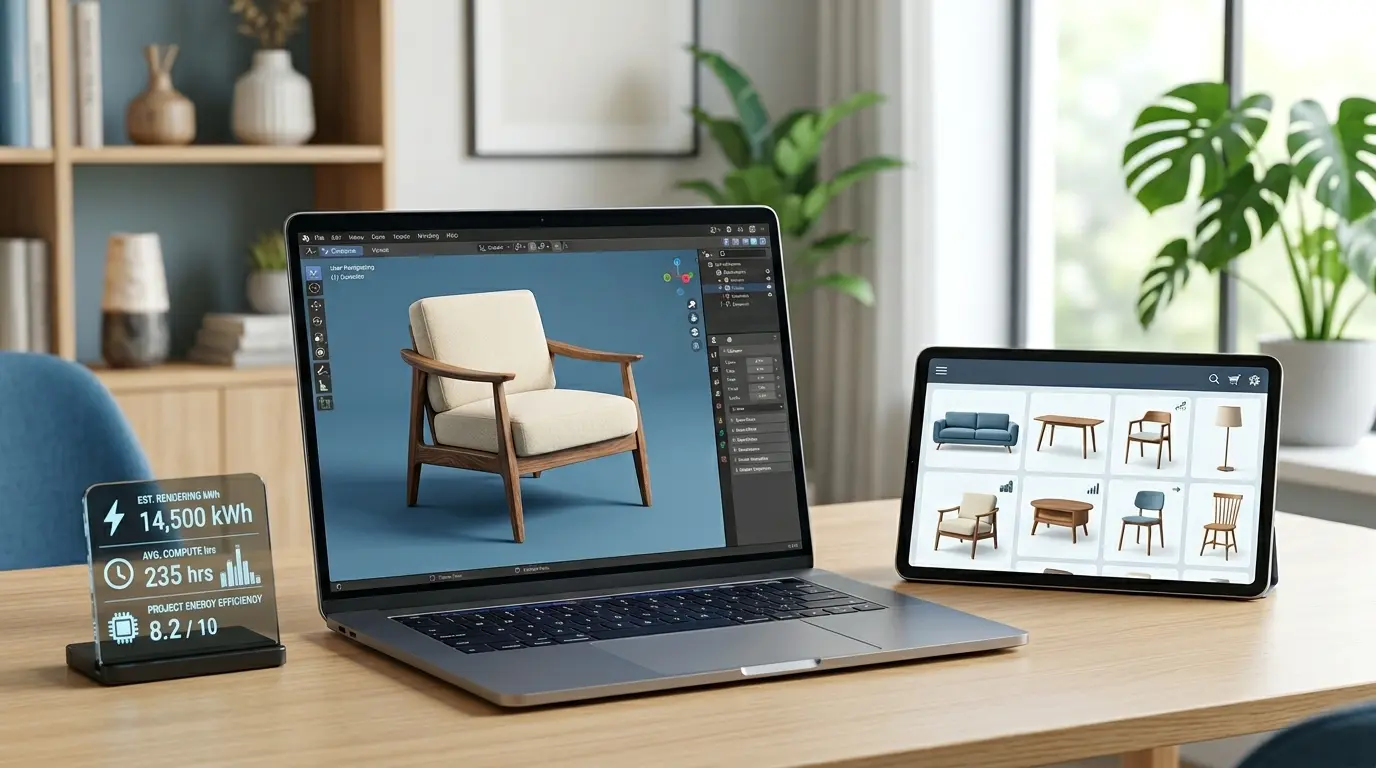

3D furniture modeling services are going to be the next big thing in the furniture industry because they provide more revenue, better ROI, and reduced customer returns at a lower cost than traditional photoshoots.
But most brand owners don’t know the actual 3D furniture modeling cost in 2026, so sometimes they become victims of pricing scams (hidden pricing) or unrealistic pricing structures (hourly rates, monthly costs).
After working with 35+ global clients, we know the real market and all the insights about 3D modeling.
In this blog, you will learn real market pricing and all the technical factors behind pricing. You will get:
- An updated furniture modeling price table for 2026
- How Much Does 3D Furniture Modeling Cost in 2026?
- Key Factors That Influence Furniture 3D Modeling Costs
- Why Some Furniture Models Cost $50 and Others Cost $500+
- The Hidden Trap: Why Buying a $50 3D Furniture Model Costs $500 Later
- Fixed Pricing vs Hourly Pricing for 3D Furniture Projects
- Hidden Costs in Furniture Photography vs 3D Visualization
- How Furniture Brands Reduce Content Costs with 3D Assets
- Beyond the Quote: 4 Costly Mistakes Brands Make When Buying 3D Furniture Assets
After reading our full guide, you will be able to confidently negotiate with any vendor to build your 3D modeling catalog.
Updated Furniture 3D Modeling Price Table – 2026
Here is the most up-to-date pricing benchmark for 3D furniture modeling in 2026. These are real market ranges – not low-ball estimates.
Furniture Type | Complexity | Price (USD) | Turnaround | Best For |
Simple Stool / Side Table | Low | $50–$150 | 1–2 days | Quick catalog fill, placeholder |
Dining Chair (standard) | Low–Mid | $100–$250 | 2–3 days | E-commerce listings |
Sofa / 3-Seater Couch | Mid | $200–$450 | 3–5 days | AR/VR, lifestyle renders |
Modular Sofa System | Mid–High | $400–$900 | 5–8 days | Configurator tools |
Upholstered Bed Frame | Mid | $250–$500 | 3–5 days | Bedroom room scenes |
Storage Unit / Wardrobe | Mid–High | $300–$600 | 4–7 days | Catalog, configurator |
Complex Sectional Sofa | High | $600–$1,200 | 7–12 days | High-end retail, AR |
Outdoor Furniture Set | High | $500–$1,500 | 6–10 days | Full scene, catalog |
Luxury / Bespoke Piece | Premium | $1,000–$3,000+ | 10–20 days | Flagship launches |
Full Room Scene (styled) | Premium | $800–$3,500 | 7–15 days | Campaign, lookbook |
PRICE CONTEXT These ranges assume clean reference materials. Poor brief quality can add 30–60% to costs in revision time. Always deliver a thorough technical brief. |
How Much Does 3D Furniture Modeling Cost in 2026?
In 2026, 3D furniture modeling costs range from $50 for basic pieces to $3,000+ for complex, premium models. The average mid-complexity furniture item (a sofa or bed) costs $200–$500 from a professional studio.
The range is wide – and that’s the problem. Most buyers compare prices without understanding what drives them. A $150 stool model and a $1,200 sectional sofa model are not just different prices. They represent entirely different scopes of work.
Here’s a practical breakdown by budget tier:
Tier | Price Range | What You Get |
Budget | $50–$200 | Basic geometry, minimal detail. Good for placeholder images or simple online listings. Not suitable for AR or configurators. |
Mid Tier | $200–$600 | Accurate geometry, realistic materials, proper UV mapping. Suitable for e-commerce, lifestyle renders, and standard AR. The sweet spot for most brands. |
Premium | $600–$3,000+ | Photo-realistic output, multiple material variants, real-time AR optimized, animation-ready. Used by IKEA, RH, Wayfair, and luxury brands. |
According to industry research, the global 3D rendering and modeling services market is projected to reach $9.2 billion by 2027, growing at ~24% CAGR. Furniture is one of the fastest-growing segments, driven by the AR shopping boom and the decline of physical showrooms post-2022.
Provider Type | Average Rate | Quality | Risk |
Offshore Freelancer (low-cost) | $30–$80/model | Variable | High |
Mid-Level Freelancer | $100–$300/model | Moderate–Good | Medium |
Specialized 3D Studio | $200–$800/model | Consistent High | Low |
Enterprise / Branded Studio | $500–$3,000+/model | Premium | Very Low |
“The most common mistake buyers make is choosing a provider based only on per-model price. The actual cost of a 3D furniture model is the sum of: the model price + revision time + integration time + the cost of mistakes. A $60 model that takes 4 revision rounds costs more than a $250 model that needs zero revisions.” – Orbe3D – Production Team, from catalog client experience |
Key Factors That Influence Furniture 3D Modeling Costs
The main cost drivers are: geometric complexity, material detail, polygon count requirements, number of variants, intended use (AR/web/print), and reference material quality. Each factor can double or halve the final price.
Ask any 3D studio what’s the first thing they look at when quoting. The answer is always: complexity. But complexity has several layers that most buyers don’t fully understand.
The 7 Core Cost Factors
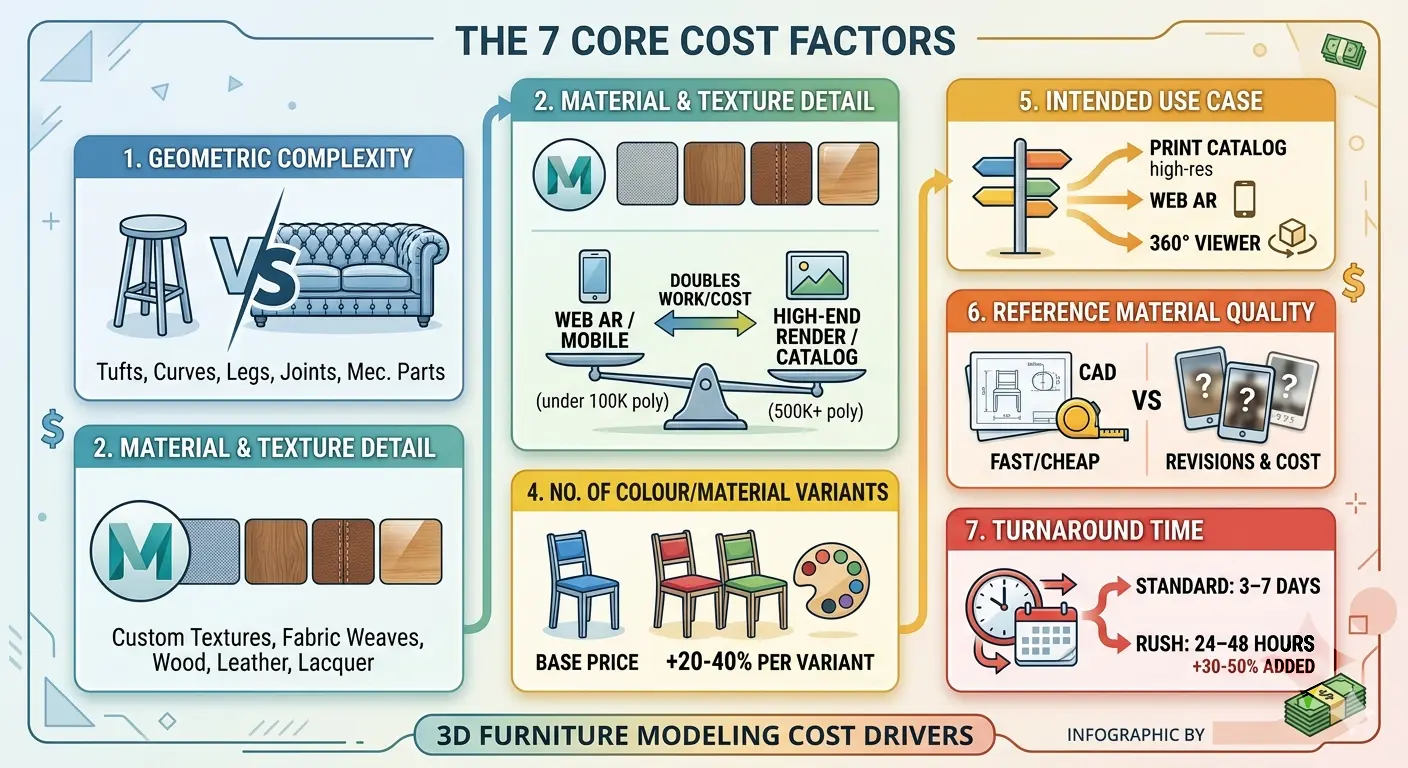
→ Geometric Complexity – How many curves, tufts, legs, joints, and mechanical parts. A tufted Chesterfield sofa = 5-8x the modeling time of a flat-panel chair.
→ Material & Texture Detail – Fabric weaves, wood grain, leather stitching, and lacquer finishes all require separate texture creation. Each realistic material adds $30–$120 to the cost.
→ Polygon Count / Technical Spec – Web AR models need under 100K polygons. High-end renders need 500K+. Optimizing for both doubles the work and cost.
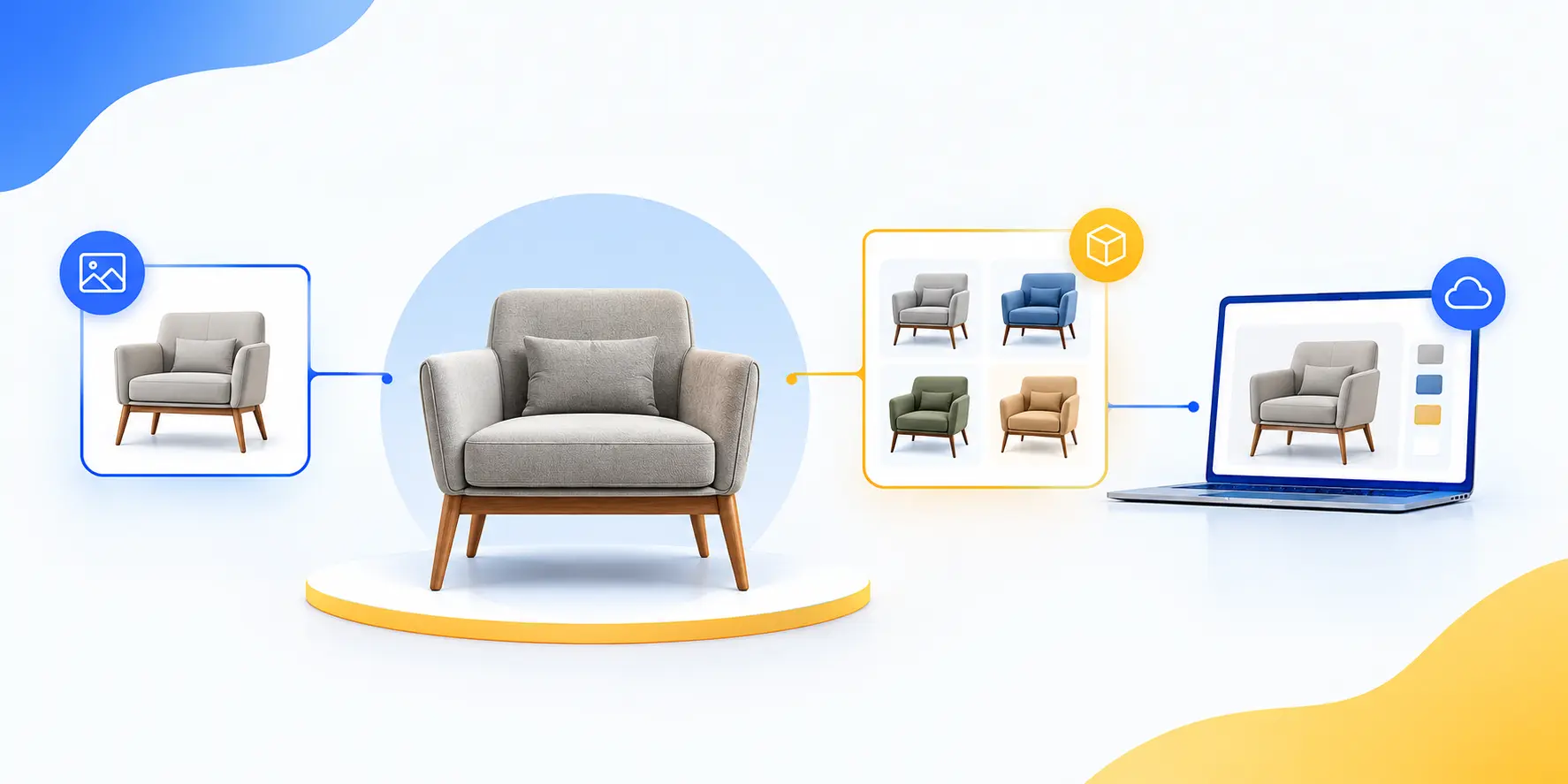
→ Number of Colour/Material Variants – First variant is the base price. Each additional variant typically adds 20–40% of the base price.
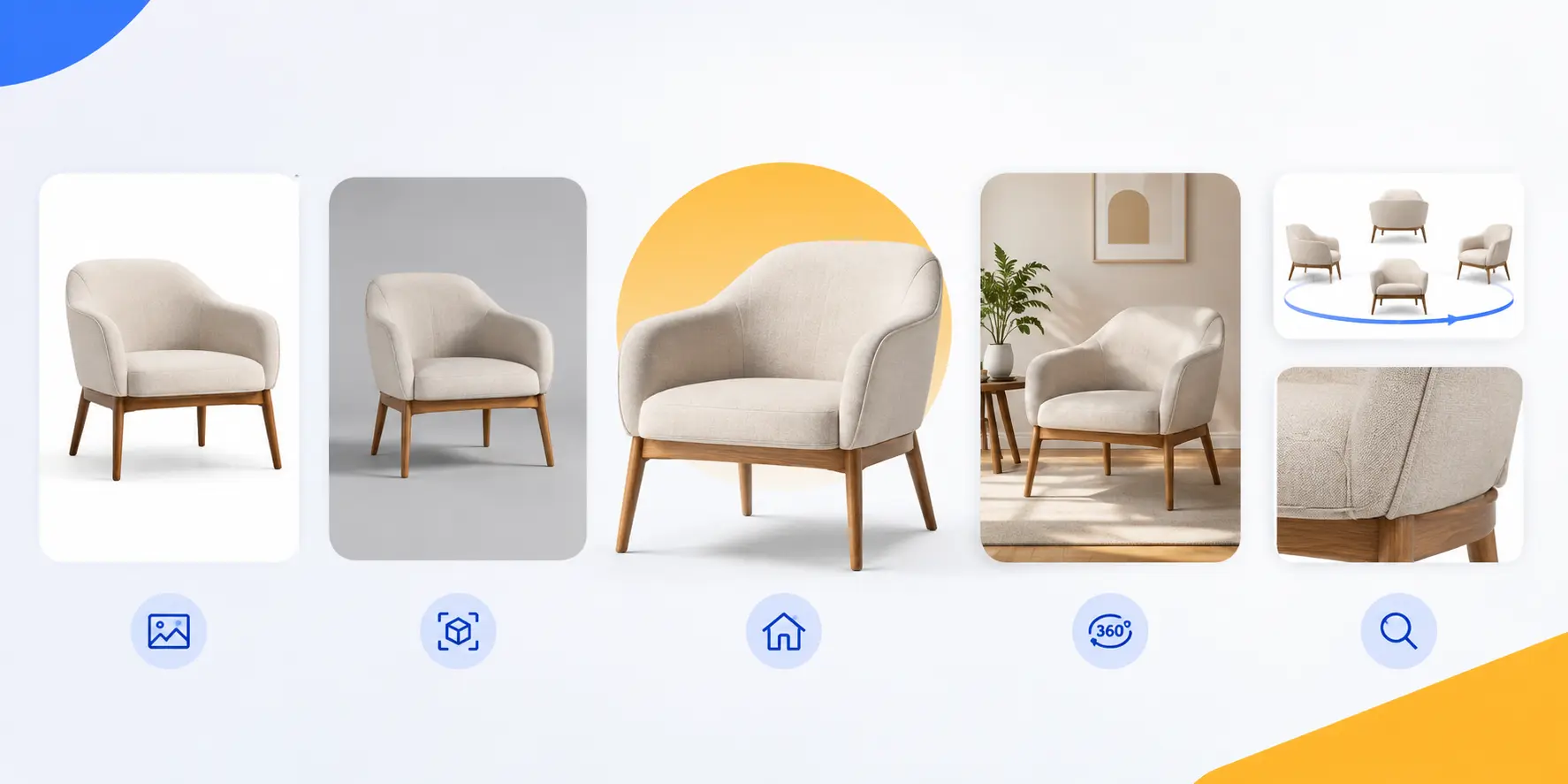
→ Intended Use Case – A print catalog render needs different specs than a real-time AR model or a 360 viewer. Multi-use deliverables cost more upfront but save later.
→ Reference Material Quality – Clean CAD drawings = faster, cheaper work. Phone photos with vague dimensions = more revisions = higher cost.
→ Turnaround Time – Standard turnaround is 3–7 days. Rush delivery (24–48 hours) typically adds 30–50% to the base price.
Cost Factor | Impact Level | Typical Price Add |
Geometric Complexity | Very High | Primary cost driver |
Material Variants | High | +20–40% per variant |
AR Optimization | High | +30–50% |
Poor Reference Materials | High | +30–60% (avoidable) |
Rush Delivery | Medium | +30–50% |
Multi-Use Spec | Medium | +25–45% (saves money long-term) |
PRO TIP Brands that prepare a clear technical brief – including orthographic drawings, exact dimensions, material swatches, and intended use cases – reduce their 3D modeling costs by an average of 25–35%. |
Why Some Furniture Models Cost $50 and Others Cost $500+
The price gap exists because deliverables are completely different. A $50 model is low-poly, single-material, and only suitable for basic thumbnails. A $500+ model is production-ready, photo-realistic, AR-compatible, and built for reuse across multiple formats.
People see a $50 model on CGTrader and a $500 quote from a studio – and assume the studio is overcharging. They’re not. They’re quoting a different product.
Think of it like comparing a stock photo ($5) to a custom brand photoshoot ($2,000). Both show a sofa. Only one builds your brand and can be reused.
$50–$120 Model – What You Get | $400–$600 Studio Model – What You Get |
Basic silhouette, low polygon count | Accurate geometry, all dimensions verified |
1 generic material, no custom texture | Custom PBR materials and textures |
No proper UV mapping | Proper UV maps, no stretching |
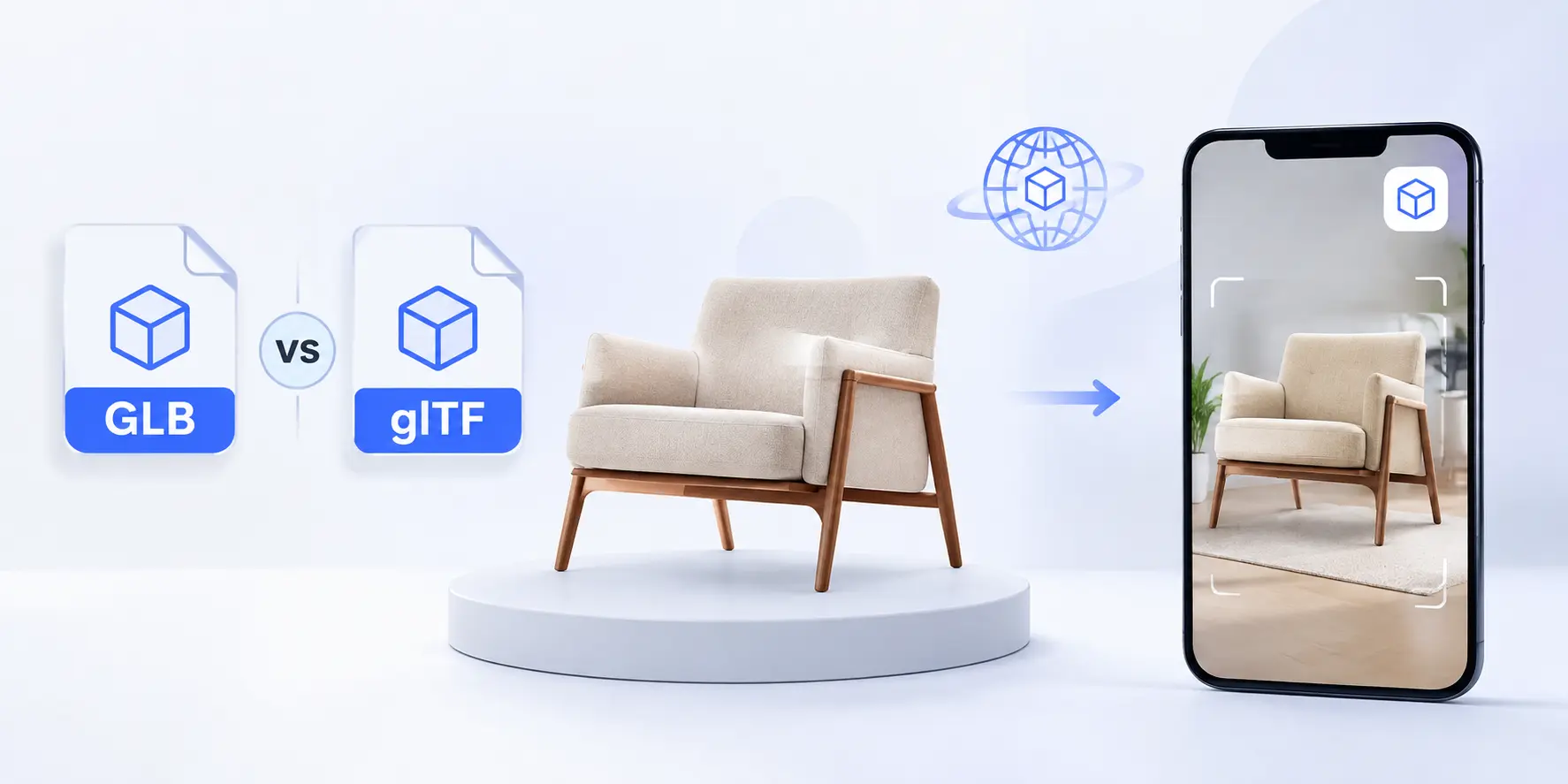
Not AR/VR ready | AR-ready (USDZ, GLB) + high-res render |
Often not accurate to your spec | Accurate to product specs (+-2mm) |
No revision rounds included | 2–3 revision rounds included |
Delivered in 1 file format only | Multiple file formats (.FBX, .OBJ, .GLB) |
“The furniture brands that scale fastest are the ones who stop thinking about per-model cost and start thinking about per-asset lifetime value. A properly built 3D model can generate images for 5 years across dozens of campaigns. A cheap model gets used once and causes problems every time.” – Industry perspective, CGI Production Director, European Furniture Retail Sector |
The Hidden Trap: Why Buying a $50 Model Costs $500 Later
Low-cost models almost always require rework, re-texturing, or replacement when used for real commercial purposes. The total cost of fixing a bad model almost always exceeds the cost of doing it right the first time.
This is the most expensive mistake in 3D furniture procurement. At Orbe3D, we’ve been called in to fix or rebuild models dozens of times after clients purchased cheap assets that didn’t perform.
Here’s how the hidden costs stack up:
Hidden Cost Area | What Happens | Extra Cost |
Re-texturing | Generic textures don’t match your fabric/finish. The artist rebuilds material from scratch. | $80–$200 |
AR Conversion | High-poly models can’t run in AR. Needs full retopology. | $100–$300 |
Dimension Corrections | Model doesn’t match product spec. Requires partial rebuild. | $50–$150 |
Revision Loops | No revisions included. Each round costs extra. | $40–$100/round |
Full Rebuild | Model is too broken to fix. Start over. | $200–$600 |
Delays & Launch Impact | Product launch delayed waiting for rework. | Variable (High) |
THE REAL MATH $50 model + re-texture ($120) + AR conversion ($200) + 2 revision rounds ($80) = $450 total. A quality studio model delivered right = $300–$350. Buying cheap costs you more. |
3 Warning Signs of a Model That Will Cost You Later
→ The quote has no mention of file formats – meaning you’ll get whatever they feel like delivering.
→ The price is per ‘image’ not per ‘model’ – you’re buying a JPEG, not a reusable asset.
→ There’s no brief or intake process – if they don’t ask for your specs, they’re not building to your specs.
Fixed Pricing vs Hourly Pricing for 3D Furniture Projects
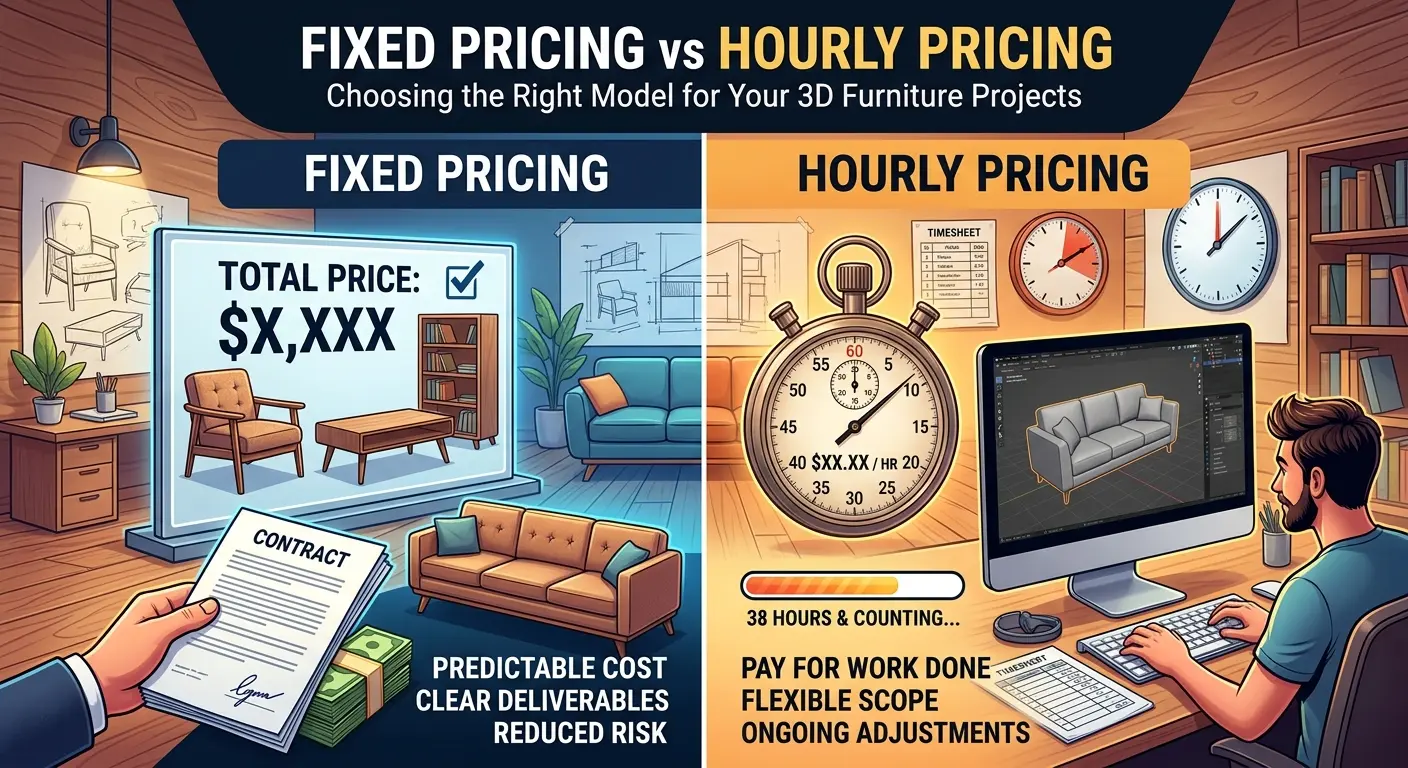
For furniture modeling: fixed pricing is almost always better for buyers. Hourly pricing introduces cost uncertainty and incentivizes slower work. Use hourly only for ongoing creative direction or undefined scopes.
When getting a quote, you’ll encounter two pricing models. Here’s the honest breakdown:
Fixed Price – When to Use | Hourly Rate – When to Use |
Defined scope: specific furniture pieces | Undefined or exploratory design work |
Clear reference materials available | Creative direction + iteration |
Production catalog work (10+ models) | Ongoing styling support for scenes |
Repeat order batches | When the scope may change mid-project |
When you need budget certainty | Animation or real-time experience builds |
3D Studio Hourly Rates in 2026
Studio Type / Location | Hourly Rate (USD) | Typical Furniture Model Time |
Offshore (South/Southeast Asia) | $15–$35/hr | 6–20 hrs per model |
Eastern Europe | $35–$65/hr | 4–12 hrs per model |
Western Europe / US Studio | $75–$150/hr | 3–8 hrs per model |
Premium Brand/CGI Agency | $120–$250/hr | 2–6 hrs per model |
WATCH OUT If you go hourly without a clear scope document, a ‘simple sofa’ can suddenly take 18 hours because of undiscussed revisions, material expectations, or file format conversions. Always agree on scope in writing first. |
Hidden Costs: Furniture Photography vs 3D Visualization
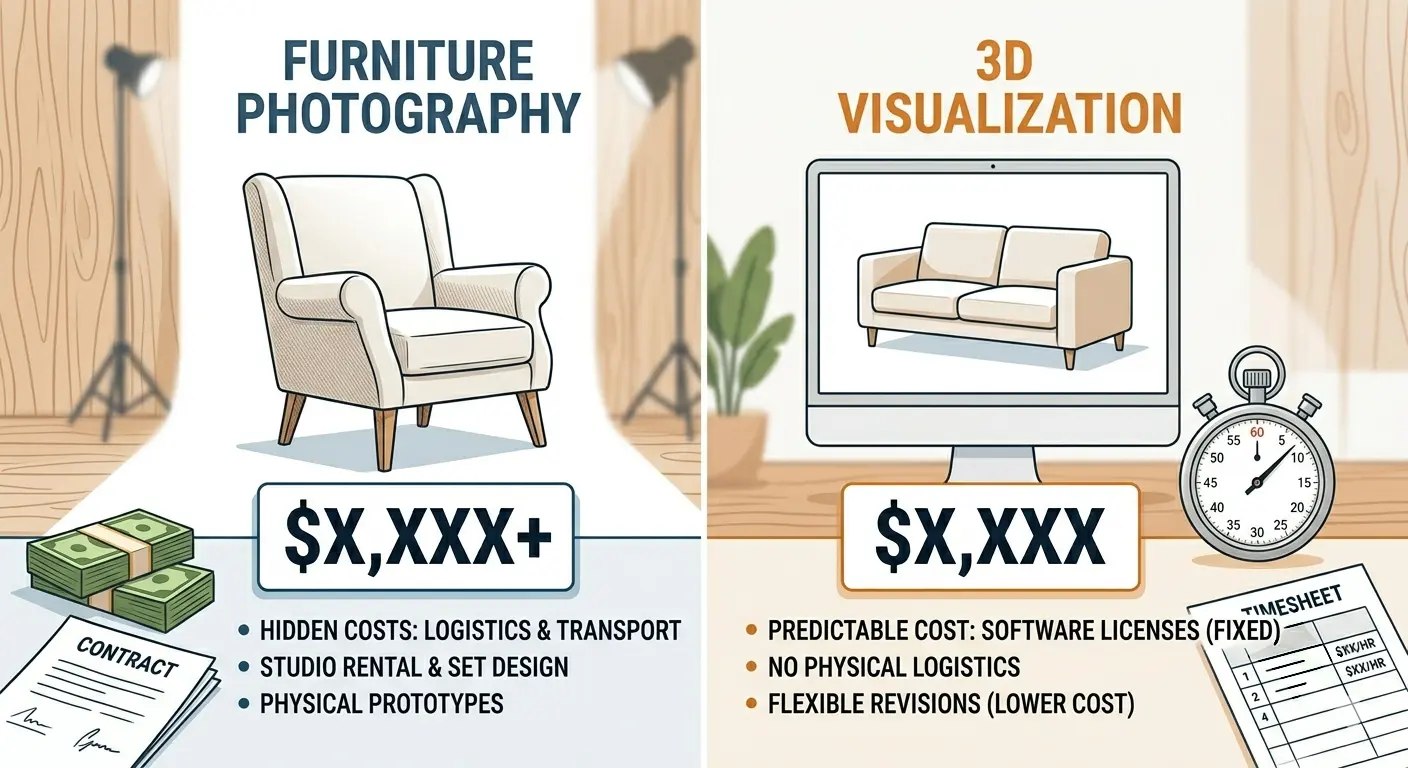
Traditional furniture photography costs $500–$5,000+ per product shoot when all costs are factored in. 3D visualization costs $200–$800 per model – but that model generates unlimited images forever. 3D becomes cheaper after the 3rd–4th image use.
Most marketing teams compare only the visible costs. Here’s the full picture:
Cost Area | Traditional Photography | 3D Visualization |
Setup Cost (first image) | $800–$3,000 (studio, props, crew) | $200–$800 (model creation) |
Additional Angles | $100–$300 per angle | $20–$60 per render |
Color/Fabric Variants | Full new shoot: $400–$1,500 | Material swap: $30–$100 |
Background/Scene Changes | $200–$800 (restaging) | $50–$200 (new 3D scene) |
Prototype Required? | Yes – must exist physically | No – visualize before production |
Revision if Product Changes | Reshoot: full cost again | Model update: 20–40% of original |
AR/Interactive Use | Not possible | Built-in (with right spec) |
The Break-Even Point
For a typical sofa with 4 fabric options and 5 key angles:
→ Photography cost: ~$2,800 (shoot) + $1,200 (3 additional color variants) = $4,000+
→ 3D cost: ~$380 (model) + $120 (3 material variants) + $100 (5 renders) = $600
→ 3D savings: Roughly 85% cheaper for same visual output – with AR capability included.
“We switched a mid-size client from photography to 3D visualization for their 300-SKU catalog. First year cost was similar. Second year costs dropped 70%. By year three, they were producing 4x more content at half the original photography budget. The 3D asset library became their biggest marketing asset.” – Orbe3D Project Lead, Catalog Scaling Case Study |
How Furniture Brands Reduce Content Costs with 3D Assets
Brands reduce costs by building a reusable 3D asset library, producing all variants upfront, batching orders for volume discounts, and repurposing one model across AR, catalog, configurator, and social – eliminating the need for repeated shoots.
The brands spending the least per content piece are not buying cheaper models. They have changed the system.
5 Proven Cost Reduction Strategies
- Batch ordering – the volume discount lever: Ordering 20+ models at once typically unlocks 15–30% per-model discounts. A $350 sofa model drops to $245–$280 at catalog volume. For a 50-piece catalog, that’s $5,000–$7,000 in savings.
- Produce all material variants at model creation time: Adding a fabric variant at the start costs $30–$80. Adding it 6 months later costs $80–$150. Always define all SKU variants before the project starts.
- Multi-use model specs – one asset, many outputs: Briefing for AR + catalog + configurator from one model increases upfront cost by ~25% – but eliminates 2 separate production runs later. Net saving: 40–60% over 18 months.
- Build a managed 3D asset library: Brands with a properly organized 3D library spend 65% less time on asset retrieval and reuse. Studios like Orbe3D offer library management as part of ongoing retainer agreements.
- Retainer agreements vs project-by-project: Brands on monthly retainers get 20–35% lower per-model costs. This also guarantees capacity and turnaround SLAs – critical during seasonal peaks.
WHAT TOP BRANDS ACTUALLY DO IKEA, Article, and Wayfair each maintain libraries of tens of thousands of 3D assets. Their per-image content cost is a fraction of what small brands pay for photography – because the infrastructure investment compounds. You don’t need their scale to start – you need their strategy. |
Beyond the Quote: 4 Costly Mistakes Brands Make When Buying 3D Furniture Assets
The most expensive mistakes are: buying on price alone, not specifying intended use, skipping the technical brief, and treating 3D models as single-use assets. Each mistake adds 30–100% to your real total cost.
Mistake 01 – Buying on Price Alone (Without a Quality Benchmark)
The most common and most expensive mistake. Without a sample or portfolio review, you’re choosing blind. The $80 freelancer quote looks identical to the $350 studio quote on paper. The difference shows up in the deliverable – and in the rework cost when the deliverable fails.
FIX Always request a sample model or portfolio of furniture specifically. Never approve a vendor without seeing comparable work. |
Mistake 02 – Not Specifying the Intended Use Case Upfront
A model built for print renders will fail in AR. A model built for AR will look flat in a lifestyle campaign. If you don’t tell the studio what the model needs to do, they’ll build to their default spec – which may not match yours.
FIX Brief for ALL intended uses from day one – AR, renders, configurator, animation. Even if you don’t use all of them immediately, the model will be ready. |
Mistake 03 – No Technical Brief (Relying on ‘You’ll Figure It Out’)
Sending a Pinterest mood board and a phone photo is not a brief. Without exact dimensions, material specifications, finish details, and reference angles, the artist is guessing. Every guess becomes a revision. Every revision costs time and money.
In our experience at Orbe3D, projects with a complete brief take an average of 40% less time and require 60% fewer revision rounds than projects with informal inputs.
FIX Use a standardized brief template. Include: product dimensions, orthographic references (front/side/top), material spec, finish samples, color codes, and intended use cases. |
Mistake 04 – Treating 3D Models as Single-Use, Disposable Assets
Many brands commission a model, use it for one campaign, then lose or discard it. The next season, they buy a new model of the same sofa. This is equivalent to destroying the original investment and starting from zero.
A properly built, well-organized 3D asset should serve your brand for 3–7 years across multiple campaigns, channels, and uses.
FIX Implement a 3D asset library from the start. Name files consistently, store all source files, and track which models have been created. Your library is a long-term marketing asset – treat it like one. |
ORBE3D EXPERIENCE NOTE At Orbe3D, we include free asset library onboarding for all catalog clients. Every model we deliver is tagged, organized, and ready for reuse – with a clear record of specs, variants, and file locations. Most of our long-term clients tell us this alone saves 5–8 hours per product launch in asset retrieval time. |
Key Takeaways
→ 3D furniture modeling costs $50–$3,000+ depending on complexity and use case
→ Mid-tier production models ($200–$600) are the sweet spot for most catalog work
→ Cheap models cost more in the long run due to rework, revisions, and rebuilds
→ Fixed pricing beats hourly for catalog work – always get it in writing
→ 3D visualization is 60–85% cheaper than photography when variants are counted
→ Batch ordering, multi-use specs, and asset libraries cut ongoing costs by 40–70%
→ 4 biggest mistakes: buying blind, no use case, no brief, disposable mindset
Frequently Asked Questions
Q: Is it cheaper to pay a flat fixed fee per furniture piece or an hourly rate?
For most furniture brands, fixed pricing is more predictable and easier to budget. Hourly pricing usually works better for ongoing projects, revisions, or highly customized modeling tasks.
Q: How much money do I actually save switching from traditional photography to 3D rendering?
Many furniture brands reduce visual production costs by 30–70% over time because 3D assets can be reused across catalogs, ads, AR, and product pages without repeated photoshoots.
Q: Does a complex tufted leather Chesterfield chair cost more to model than a minimalist wooden table?
Yes. Complex furniture with tufting, stitching, carvings, and curved surfaces requires significantly more modeling and texturing time than simple modern furniture designs.
Q: How do texture variations (fabric vs. leather vs. velvet) impact the final price?
Premium materials like leather, velvet, and detailed fabrics often increase costs because they require advanced texture creation, realistic lighting behavior, and close-up rendering accuracy.
Q: Can I just use a $20 AI 3D generator instead of hiring a professional modeler?
AI generators may work for rough concepts, but they usually lack production-ready geometry, accurate dimensions, clean topology, and realistic material quality needed for eCommerce, AR, or manufacturing use.
Q: Is there an extra fee to convert a website 3D model into an AR or Apple Vision Pro format?
Often yes. AR-ready optimization, USDZ/GLB conversion, compression, and platform testing usually require additional technical work beyond standard 3D modeling.
Q: Why is the studio charging me extra to get the .FBX and .OBJ files?
Some studios separate source files from final renders because editable 3D assets have long-term commercial value and can be reused across multiple platforms and campaigns.
Q: Does the quote include the source file, or just the final JPEG/PNG images?
Not always. Many quotes only include rendered images, so brands should confirm whether editable source files are included before starting the project.
Q:How many rounds of revisions are actually included before I get billed extra?
Most studios include 1–3 revision rounds. Additional changes after approval stages are usually billed separately, especially for structural design edits.
Conclusion
For furniture brands, 3D modeling is not just a content expense , it is a long-term asset that can reduce production costs, speed up launches, and support every stage of the customer journey.
The real advantage comes from building high-quality, reusable models that work across product pages, catalogs, configurators, and AR experiences without repeated reshoots or unnecessary rebuilds.
At Orbe3D, we believe the smartest brands are the ones that plan their 3D workflow strategically, define quality from the start, and invest in assets that keep delivering value well beyond a single campaign. If your goal is to scale content efficiently in 2026, the best place to start is with a 3D foundation built for reuse, consistency, and growth.