As someone who works closely with furniture brands, I know how challenging it can be to stand out online. Digital marketing for a furniture business is all about using smart strategies to attract, engage, and convert your buyers, whether they shop in-store or online. In this blog, I’ll walk you through 7 proven strategies that I use to help furniture businesses drive traffic, boost sales, and build lasting customer relationships. By the end, you’ll know exactly what steps to take to grow your store and stay ahead in 2026.
The 3-Core Pillars of Digital Marketing for Furniture Stores
Section | Focus Area | What You’ll Learn |
1. Buyers & Foundation | Audience + Website | Understand furniture buyers, the buying journey, and how to build a sales-ready website |
2. Traffic That Converts | SEO, Ads & Content | How to attract high-intent buyers using SEO, paid ads, content, and social media |
3. Conversion & Growth | Funnels, 3D & Analytics | Turn visitors into buyers, reduce returns, build loyalty, and scale with data |
The Ultimate 7-Step Plan for Furniture Store Digital Marketing
In this section, we’ll walk you through 7 actionable strategies that help furniture stores attract real buyers, boost sales, and build lasting customer relationships. You’ll learn how to optimize your website, drive high-intent traffic, use 3D visuals, and turn visitors into loyal customers.
1. Understand Your Furniture Buyers & Market
Before you start any digital marketing for a furniture business, you need to know who your customers are and how they behave. Without this foundation, even the best ads or websites won’t convert.
Know your audience: D2C, B2B, and local vs online buyers
Furniture buyers can be very different depending on their type:
- D2C (Direct-to-Consumer): Individual buyers who shop for their homes. They care about style, price, delivery, and visuals.
- B2B (Business-to-Business): Offices, hotels, or interior designers. They focus on bulk orders, pricing, and reliability.
- Local vs Online Buyers: Some prefer visiting a showroom before buying, while others rely entirely on online research and delivery.
Knowing your audience helps you customize your website, content, and ads for each group. For example, D2C buyers respond well to high-quality images and 3D product views, while B2B clients need detailed specs and bulk pricing info.
How furniture buyers research and decide
Most furniture buyers follow a similar path before purchasing:
- Awareness: They see a product online, on social media, or in ads.
- Research: They compare styles, prices, reviews, and delivery options.
- Evaluation: They check your website, product images, and even videos or AR/3D previews.
- Decision: They purchase online or visit a showroom.
Tip: In fact, studies show that 70% of furniture buyers research online before visiting a store. [Source: Statistics ]
Knowing this helps you plan digital marketing strategies that match each stage, from ads to content to lead capture.
Common marketing challenges furniture brands face
Furniture businesses often struggle with:
- Standing out online: Many stores use similar keywords and images.
- Converting visitors: High website traffic doesn’t always mean sales.
- Tracking ROI: Without proper analytics, it’s hard to know what’s working.
- Reaching the right buyers: Ads may reach general audiences, not your ideal D2C or B2B clients.
By understanding your audience and their buying journey, you can overcome these challenges with targeted digital marketing for furniture business strategies.
2. Build a Sales‑Ready Online Presence
To turn visitors into customers, your website must feel trustworthy, clear, and easy to use. This is especially true for furniture, which is usually a high‑consideration purchase compared to low‑priced items.
High‑converting website essentials for furniture stores
Your website is like a digital showroom; it’s often the first impression a buyer gets.
Conversion benchmarks:
- Furniture ecommerce sites have an average conversion rate of about 0.8% to 1.5%, lower than many industries due to higher prices and research needs. [according to research]
- On average, organic search traffic converts at roughly 2–4% when optimized well. [According to research by longelizard]
A good site should have:
- Clear product categories (so users find what they want fast)
- Fast load times (53% of users leave if a site loads too slowly)[According to insights from sketches]
- Easy checkout with simple steps and clear pricing
💡 Now the question is: “Why does my site get clicks but not sales?”
Often, it’s because the website feels confusing or slow, making buyers leave before they trust you enough to buy.
UX and mobile‑first design for better engagement
Most people browse furniture on phones first, but mobile often lags in conversions when not optimized.
Mobile trends:
- Around 61% of furniture site traffic comes from mobile devices. [As per ienhance research]
- But mobile conversion rates tend to be lower than desktop unless the site is optimized for mobile UX. [ according to loungelizard ]
Good UX design for furniture stores means:
- Clear navigation and simple menus
- Easy filters and search
- Quick‑to‑read product details
If mobile users can’t quickly find size, material, or delivery info, they will leave and likely go to a competitor.
Visual presentation that builds trust: images, videos, 3D renders
Furniture buyers rely heavily on visuals because they can’t physically touch the product online.
Visual impact stats:
- High‑quality visuals can boost conversions by up to 40%. [According to Market Research]
- Interactive visuals like 3D or AR can increase conversions even more; some studies show a 25–40% lift when AR or interactive tools are used.[Based on data from 1center]
- Shopify research found 3D visuals led to a 27% increase in orders. [As per ienhance research]
💡 Visuals help because furniture buyers want to see scale, texture, and fit before they buy, and static photos often aren’t enough.
3. Get Traffic That Actually Converts
(Attract real buyers, not just visitors, essential for furniture marketing for furniture store owners)
Attracting traffic is one thing, turning that traffic into buyers is another. Digital marketing for furniture stores should focus on channels that bring active buyers.
SEO basics for furniture businesses (organic + local)
SEO helps your store appear when buyers are actively searching for furniture.
Key facts:
- 80%+ of furniture companies use SEO to improve visibility.[according to market data]
- Organic traffic often converts better than social or paid because searchers have higher intent. [according to reports]
Simple SEO actions for furniture stores:
- Target keywords like “modern sofa online” or “best office desk near me.”
- Optimize Google Business Profile for local searches (‘furniture store near me’)
- Include clear product descriptions and schema markup
💡 One of my client ask me: “Why am I getting traffic but not sales?”
If your traffic isn’t targeted (i.e., people who are ready to buy), your conversion rate stays low even if your pageviews are high.
Paid ads overview: Google & Meta, when and why
Paid advertising can help you reach buyers faster than organic alone.
When to use paid ads:
- Google Ads for buyers actively searching product terms
- Meta (Facebook/Instagram) ads for discovery and retargeting
- Remarketing ads can increase conversions significantly by reminding previous visitors to come back and buy.
Paid ads are especially useful if:
- Your organic traffic is slow to grow
- You want to test new products fast
- You want to re‑engage visitors who abandoned carts
Paid ads should be measured and optimized regularly, not “turned on and left.”
Content marketing that supports buying decisions
Content helps you answer questions your buyers are searching for before they buy.
Examples:
- “How to choose a sofa size.”
- “Tips for living room layout”
- Care & maintenance guides
Content builds trust and drives organic traffic over time, this is why about 78% of furniture brands use content marketing to attract and educate buyers.
Social media’s real role in furniture marketing
Social media can reach people earlier in their buying journey.
Stats from the furniture industry:
- 70% of furniture brands are active on Facebook. [according to market data]
- Social ads often have lower direct conversion rates (~1–2%) but build brand awareness.
- Engagement tactics (stories, UGC) help move users from awareness to purchase interest.
Think of social as the “interest bucket”; it warms up people before they search or visit your site.
Wrap‑Up: What This Means for You
To attract real buyers, focus on:
- SEO that targets purchase keywords
- Paid ads for both search and remarketing
- Helpful content that answers buyer doubts
- Social presence that creates early familiarity
These combine into a digital marketing strategy that draws people in and moves them toward buying, not just browsing.
4. Turn Visitors into Customers & Repeat Buyers
(Where revenue happens, digital marketing for furniture stores)
Getting traffic is only half the battle. Many furniture business owners ask themselves: “Why am I getting clicks but no sales?” Often, it’s because visitors aren’t guided through a clear funnel, or the website doesn’t feel trustworthy. To solve this, focus on lead capture, nurturing, and retention.
Lead Capture & Simple Sales Funnels
A clear sales funnel guides buyers from curiosity to purchase. Lead capture forms help stay connected with interested buyers, especially those who aren’t ready to buy immediately.
Key steps for a furniture sales funnel:
- Awareness: Visitors discover your store via SEO, ads, or social media.
- Consideration: Visitors read guides, explore 3D renders, or watch product videos.
- Conversion: Visitors request a quote, sign up, or make a purchase.
Measurable impact:
- Stores using lead capture and follow-ups see a 20–30% lift in conversions [according to industry experts, source].
💡 If you can ask me: “Will capturing emails really help me sell more?”
Yes, even if they don’t buy immediately, you can nurture them until they’re ready.
Email Marketing for Follow-Ups & Loyalty
Email marketing helps turn leads into buyers and repeat customers. Many furniture brands ask: “Do emails really work for furniture stores?” The answer is yes, it’s one of the highest ROI channels.
Effective email strategies for furniture stores:
- Welcome emails: Introduce your brand and recommend products.
- Post-purchase emails: Include care tips, installation guides, or complementary items.
- Loyalty emails: Offer special discounts or early access to new collections.
Impact data:
- Average ROI for email marketing: $36 for every $1 spent.
- Can boost repeat purchases by up to 30%.
Reviews, Trust Signals & Social Proof
A common question: “Will reviews really influence furniture buyers?” Yes, buyers rely heavily on social proof for big-ticket purchases.
How to leverage trust signals:
- Display product reviews and ratings prominently.
- Share testimonials from happy customers.
- Feature user-generated content like photos from customers’ homes.
Stats:
- 92% of consumers read reviews before buying high-value items (source).
- Displaying reviews can increase conversion rates by up to 270%.
Retention Basics: Repeat Purchases & Referrals
Many owners ask: “How can I keep buyers coming back?” Repeat customers are cheaper to retain than acquiring new ones.
Retention tactics for furniture stores:
- Loyalty points or reward programs.
- Referral incentives (discounts for friends/family).
- Seasonal campaigns or updates to previous purchases.
Impact data:
- Increasing customer retention by just 5% can boost profits 25–95% (source).
✅ Key takeaway: Combine lead capture, email nurturing, trust signals, and loyalty programs to turn website visitors into loyal buyers
5. Enhance Marketing With 3D Modeling & Rendering
(Subheading introduces your service naturally, no pushy promotion, furniture digital marketing advantage)
Many furniture business owners wonder, “Do I really need 3D renders for my products?” The truth is, 3D modeling and rendering can transform how buyers perceive your furniture online, helping them visualize size, color, and material, which builds confidence and reduces returns.
Showcase Furniture Realistically Without Photography
Traditional product photography is expensive and time-consuming. 3D renders let you:
- Show every angle, texture, and finish of your furniture.
- Create consistent visuals across the website, social media, and catalogs.
- Easily update images for new colors, fabrics, or styles without reshooting.
Impact: Stores using 3D visuals report up to 27% higher online orders (Shopify research).
💡 One important question is: “Will 3D renders really replace photos?”
Yes, for online sales, 3D visuals provide the same trust and detail, often faster and cheaper than traditional photography.
Reduce Returns and Increase Buyer Confidence
One of the biggest challenges in furniture ecommerce is returns due to wrong size, color, or style expectations.
3D visualization helps buyers:
- Understand scale and dimensions before purchase.
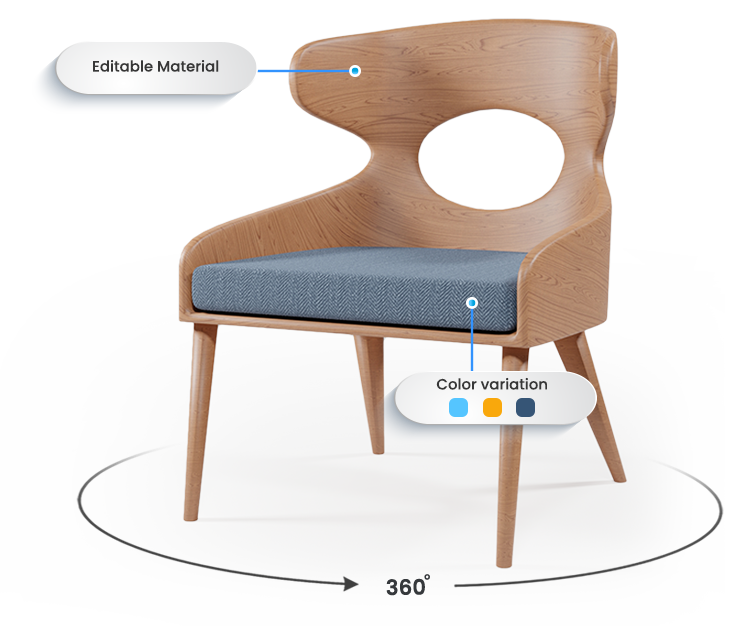
- Preview furniture in different colors or fabric options.
- Make informed decisions, reducing buyer hesitation.
Data: 3D product visualization can reduce returns by 20–30%, according to industry case studies.
💡 Buyer question: “Can 3D really reduce returns?”
Absolutely, when buyers clearly see what they’re getting, fewer products are returned.
Use for Social Media, AR/VR, eCommerce, and Catalogs
3D renders are versatile tools for multiple marketing channels:
- Social media campaigns: Engaging 3D visuals or short video clips for Instagram, Facebook, and TikTok.
- AR tools: Let customers “try before they buy” using AR in their own space.
- E-commerce: Interactive product pages with 3D views increase engagement.
- Catalogs & brochures: Showcase products in print or digital catalogs with high accuracy.
💡 One of my buyer ask me: “Will 3D work for all platforms?”
Yes, it’s flexible for online and offline marketing campaigns alike.
Flexible for Customization & Marketing Campaigns
3D renders make it easy to:
- Show multiple colors, fabrics, or layout options quickly.
- Launch seasonal campaigns or limited-edition product visuals without extra photoshoots.
- Combine with email, social, and paid ad campaigns for cohesive furniture marketing.
Common Buyer Questions About 3D Visualization
Many furniture business owners ask these questions naturally during planning:
- “Do I really need 3D renders for my furniture products?”
→ Yes, they improve visualization, trust, and buyer confidence. - “Can 3D product visualization increase online sales?”
→ Absolutely, interactive visuals can increase conversion rates by 25–40% (1Center AR research). - “How much does 3D rendering cost for a furniture store?”
→ Costs vary, but uare sually less than traditional photoshoots with easier updates. - “Can 3D renders reduce product returns?”
→ Yes, accurate visualization reduces mismatch expectations and returns. - “Are 3D visuals useful for both B2B and B2C buyers?”
→ Absolutely, for online sales, catalogs, and showroom presentations.
✅ Key takeaway: Integrating 3D modeling and rendering into your furniture digital marketing strategy enhances trust, reduces returns, and drives sales, making it a must-have tool for modern furniture stores.
6. Measure What Matters & Improve
After you’ve set up your digital marketing for furniture stores, it’s crucial to know what’s actually working. Tracking the right metrics helps you invest in channels that bring real results and cut efforts that don’t.
Track key metrics: traffic, leads, conversion rates, ROI
Not all website visitors are equal. To optimize your digital marketing for furniture business, focus on metrics that show real performance:
- Traffic: Look beyond total visits – track organic, paid, and referral sources.
- Leads: Measure how many visitors sign up for newsletters or request quotes.
- Conversion rates: The percentage of visitors who buy or take your desired action.
- ROI: Compare marketing spend vs revenue generated from campaigns.
Data point: Furniture ecommerce conversion rates average 0.8–1.5%, but targeted campaigns with proper tracking can push this up to 3–4% (Shopify Plus).
💡 Some of my buyers thought he asked me: “I see traffic but not sales – how do I know what’s working?”
Tracking these metrics shows which campaigns attract buyers versus browsers.
Identify high-performing channels vs low-impact efforts
Not every marketing channel gives equal results. Use furniture retail analytics to identify:
- Which social media platforms generate leads or clicks?
- Which paid ads deliver the highest ROI?
- Which content or product pages convert best?
Tip: Stop spending on channels with low conversions and double down on what works.
Test → learn → improve with furniture retail analytics
Optimization is ongoing. Use analytics to experiment, learn, and improve:
- Run A/B tests on landing pages, product visuals, or ad creatives.
- Test different CTAs in email campaigns or social media posts.
- Use buyer behavior insights to adjust pricing, visuals, or copy.
💡 Buyer thought: “How do I improve slow conversions?”
Small iterative changes guided by data often lead to significant revenue growth over time.
7. Final Takeaway & Next Step
Digital marketing for furniture stores works best when it’s strategic, measurable, and integrated. Here’s how to act:
How to prioritize digital marketing and visual strategies
Focus on actions that directly impact sales first:
- Build a high-converting website with strong UX and visuals.
- Create 3D renders or AR content to increase buyer confidence.
- Target SEO and paid ads to attract buyers ready to purchase.
Quick wins vs long-term improvements
- Quick wins: Optimize mobile UX, add 3D images to bestsellers, update product descriptions, run targeted Google ads.
- Long-term improvements: Develop content marketing (blogs, guides), implement email nurture sequences, and expand social campaigns.
One clear action step for furniture store owners
Start with your website and visuals. Ensure buyers can easily see, trust, and choose your products. Everything else – SEO, ads, social media, email – will drive traffic and repeat sales if this foundation is strong.
✅ Key takeaway: Combine digital marketing for a furniture business with engaging visuals and measurable analytics. This approach builds trust, reduces returns, attracts buyers, and drives long-term growth
Frequently Asked Questions
1) Why am I getting traffic but not enough sales?
This happens when visitors aren’t ready to buy, or your site doesn’t guide them clearly. Focus on targeted SEO and conversion optimization to turn visits into sales.
2) Do buyers really buy expensive furniture online without seeing it first?
Yes, but high-ticket items often need trust signals, visuals, and reviews before buyers feel confident.
3) What’s the best way to promote a small furniture business online?
Use strong product visuals, local SEO, and content that answers common buyer questions to stand out from competitors.
4) How important is a Google Business Profile for my furniture store?
Very. It boosts local search visibility and increases both online and in-store visits.
5) Should I use social media to sell furniture?
Yes – for awareness and interest. Actual purchases usually happen on your website or through search-driven traffic.
6) Do I need paid ads if my SEO is working?
Paid ads provide faster visibility and reach buyers actively searching. Combining SEO and ads often gives the best results.
7) What’s the biggest challenge in marketing furniture online?
Furniture has high prices and long research cycles, so trust, content, and reviews are key to converting visitors.
8) How can I get more Google reviews for my furniture store?
Ask happy customers directly and make reviewing simple with direct links. Positive reviews improve trust and local SEO.
9) How long does it take for SEO to show results?
Typically 3–6 months with consistent optimization and focus on high-intent keywords.
10) Can small stores compete with big brands like Ikea online?
Yes – by targeting niche or long-tail keywords, optimizing local SEO, and using strong visuals and reviews
Conclusion
Digital marketing for a furniture business works best when visitors become buyers. Understanding your audience, having a user-friendly website, driving targeted traffic, and using engaging content are key.
3D modeling and rendering can be a game-changer. At Orbe3D, we help furniture brands showcase products realistically, boost buyer confidence, and reduce returns. Interactive visuals and AR experiences make customers trust your products and buy faster.
Next step: Improve your site, optimize SEO, add 3D visuals, and capture leads. Start turning visitors into loyal customers today with Orbe3D.com.