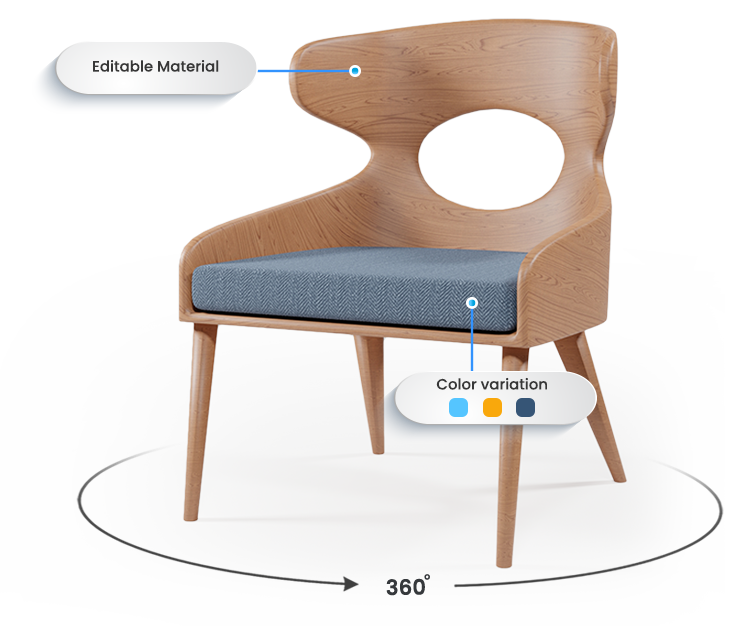
High-quality 3D furniture rendering has transformed how furniture brands showcase products online. Instead of relying on physical prototypes or expensive photoshoots, businesses now use advanced 3D product visualization to create photorealistic furniture images before production even begins.
Industry research shows that brands using furniture rendering solutions can reduce visual production costs by 30–60% and shorten product launch timelines by 40% or more. With a single 3D model, businesses can create unlimited variations—colors, materials, and finishes—without additional shooting costs.
From e-commerce listings and online catalogs to ads, AR/VR previews, and interior design presentations, this guide explains how 3D furniture rendering helps businesses save time, reduce costs, and increase customer confidence.
2. What Is 3D Rendering?
3D rendering is the process of converting 3D furniture models into realistic 2D images using advanced rendering software.
Unlike traditional photographywhich requires finished products, studio space, lighting equipment, and logistics3D rendering allows everything to be created digitally with precision and flexibility.
With modern 3D product visualization, furniture brands can present products long before manufacturing begins. Designers and marketers can test multiple visual directions, layouts, and environments using the same base 3D model. This approach reduces dependency on physical samples and avoids costly rework.
From an operational perspective, 3D rendering acts as a bridge between design, manufacturing, and marketing. It ensures all teams work from the same visual reference, reducing misunderstandings and accelerating decision-making.
Brief History (Expanded Context)
The development of 3D rendering technology directly impacts today’s furniture industry:
- 1960s–1970s: Early computer graphics focused on wireframe models and basic geometry, mainly for research and engineering.
- 1980s: Introduction of personal computers enabled designers to experiment with surface shading and simple textures.
- 1990s: Faster CPUs and GPUs made photorealistic product rendering commercially viable.
- 2000s–Present: Real-time rendering, physically based materials, and cloud computing allow furniture brands to produce marketing-ready visuals at scale.
Today, furniture rendering is no longer experimental; it is a core business tool for competitive brands.
How 3D Rendering Works (Detailed Workflow)
The furniture rendering pipeline is structured and repeatable:
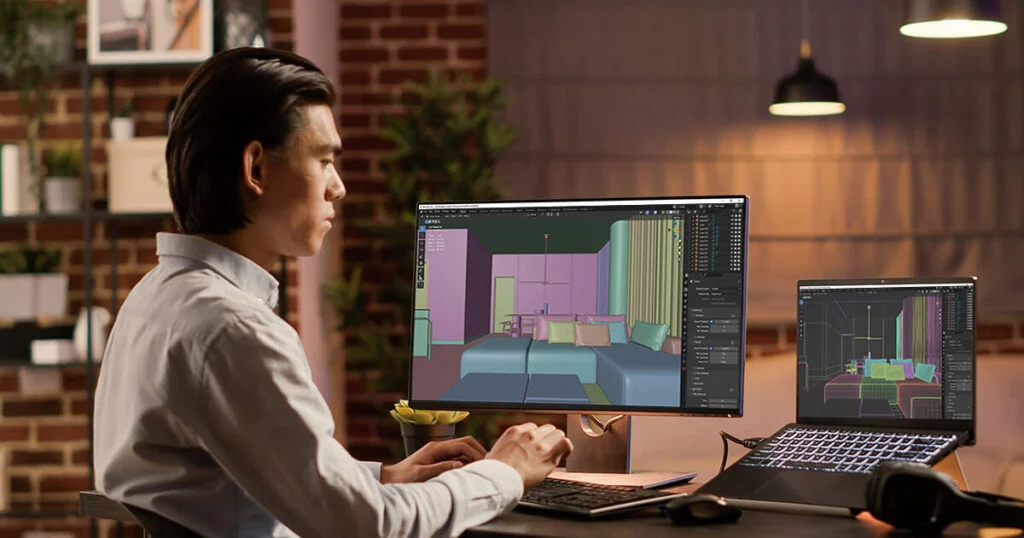
- Modeling – Furniture is digitally built based on CAD files, sketches, or reference images. Accuracy in dimensions ensures the model matches manufacturing specs.
- Texturing – Materials such as wood grain, fabric weave, leather, or metal finishes are applied with realistic surface properties.
- Lighting – Professional lighting setups simulate daylight, studio light, or ambient interior lighting to highlight form and texture.
- Rendering – High-resolution images are generated using rendering engines that calculate shadows, reflections, and depth.
- Post-Production – Final adjustments ensure visual consistency across catalogs, ads, and e-commerce platforms.
Each stage replaces time-consuming physical processes with faster digital alternatives.
What Is Furniture Rendering?
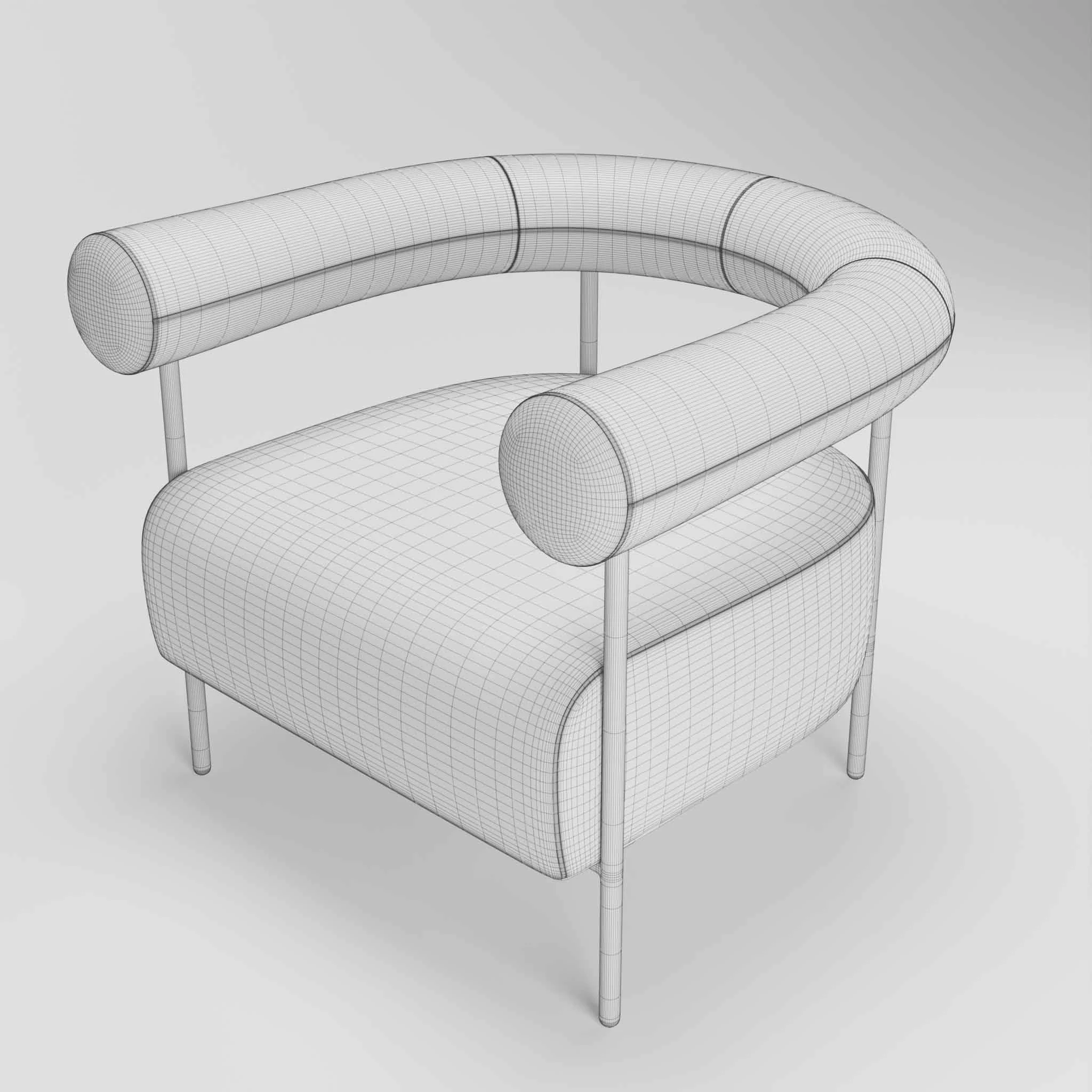
Furniture rendering is a specialized application of 3D rendering focused solely on furniture products. It enables brands to validate designs, present concepts, and market products before any physical item exists.
For furniture businesses, this means fewer prototypes, faster approvals, and lower development risk.
3. The Role of 3D Furniture Rendering in Marketing
3D furniture rendering plays a strategic role across the entire marketing funnelfrom product launch to conversion.
Pre-Launch Marketing: Brands can start promotions before manufacturing begins. This shortens time-to-market and helps test demand early.
E-commerce Optimization: Consistent angles, lighting, and backgrounds improve visual clarity. Clean and detailed visuals reduce buyer hesitation and increase add-to-cart actions.
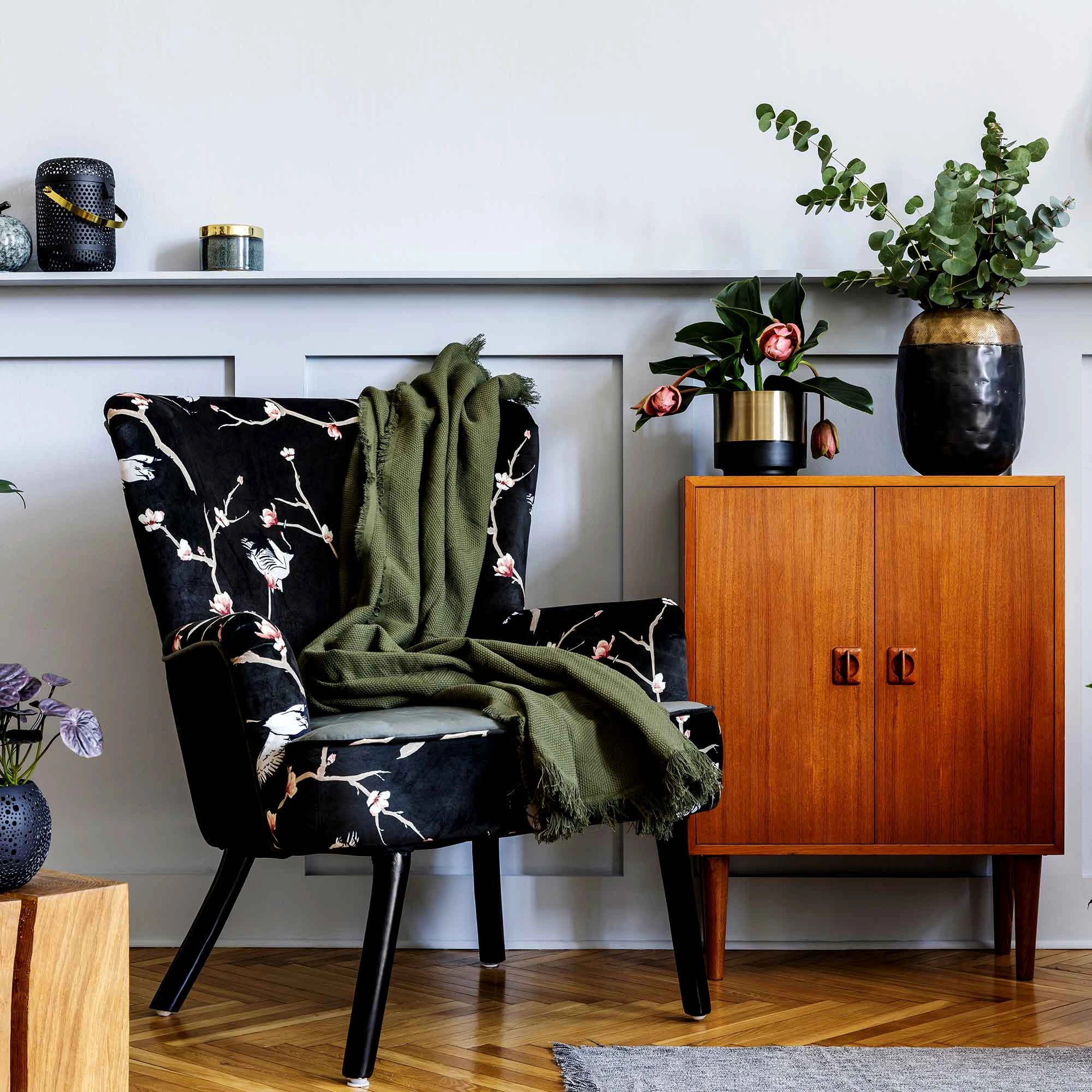
Brand Storytelling: Lifestyle renders place furniture in realistic environments, helping customers emotionally connect with the product.
Campaign Scalability: One 3D model can support multiple campaigns, platforms, and regions without additional production effort.
Overall, 3D rendering turns marketing from a static process into a flexible, scalable system that adapts to business needs.
Why Furniture Businesses Need 3D Rendering
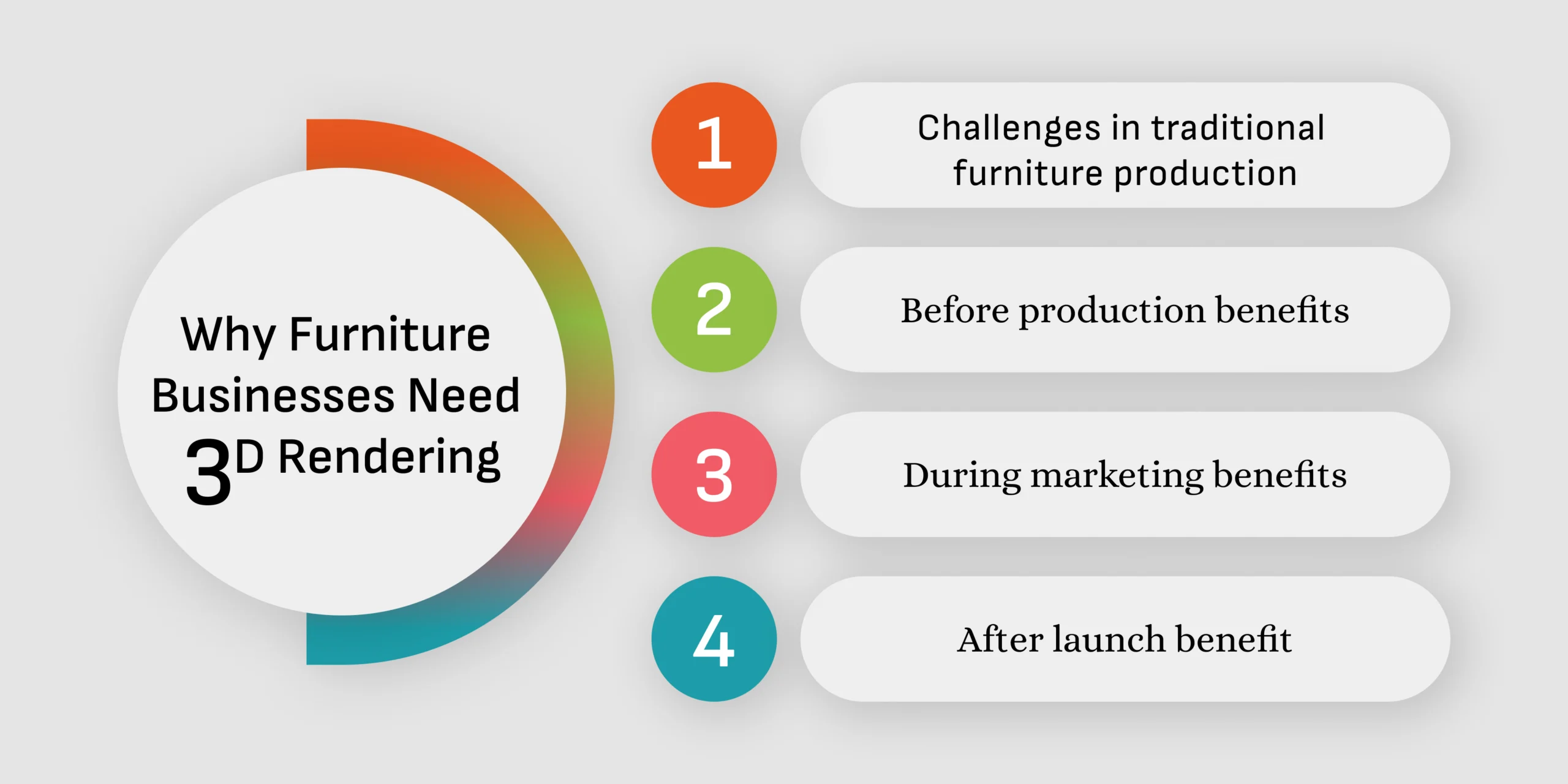
Furniture businesses operate under tight profit margins, long production cycles, and increasing customer expectations for visual accuracy. Traditional workflowswhere products are manufactured first and marketed laterare slow, expensive, and risky. 3D furniture rendering directly solves these challenges by shifting visualization to the digital stage.
Stage | Problem | 3D Rendering Solution | Benefit |
Before Production | Design errors, slow approvals | Validate designs digitally | Cuts mistakes & rework, faster approvals |
During Marketing | Wait for inventory | Render products before production | Launch 60–70% faster |
After Launch | Expensive reshoots | Update visuals instantly | 80% faster updates, 30–50% cost savings |
Long-Term | High content cost, slow adaptation | Integrate across workflow | Strategic growth, better engagement |
Before Production: Reduce Risk and Validate Designs
Before a single piece of furniture is manufactured, 3D rendering allows brands to validate designs digitally. Designers and manufacturers can review proportions, materials, finishes, and structural details in advance. This reduces costly mistakes, minimizes rework, and limits the need for multiple physical prototypes.
For furniture businesses, this means faster approvals, better internal alignment, and lower development costs.
During Marketing: Launch Without Waiting for Inventory
With 3D product visualization, marketing no longer depends on finished stock. High-quality renders can be created while products are still in production, allowing brands to:\n- Prepare e-commerce listings early\n- Launch pre-orders\n- Build catalogs and ad campaigns in advance
This parallel workflow shortens time-to-market and gives businesses a competitive advantage, especially in fast-moving or seasonal furniture segments.
Actionable Checklist: How to Implement 3D Furniture Rendering
Step 1: Prepare CAD drawings or reference images
Start by collecting what you already have. This can be CAD drawings, hand sketches, product photos, or even reference images from past collections. The clearer your references, the more accurate the final 3D furniture model will be.
Step 2: Choose a rendering partner with furniture experience
Not all 3D artists understand furniture construction. Choose a rendering partner who has experience with furniture shapes, materials, and real-world proportions. This ensures the renders look realistic and match manufacturing standards.
Step 3: Decide required outputs (white background, lifestyle, 360°)
Before work starts, decide how you will use the images. White-background renders are best for e-commerce, lifestyle scenes work well for marketing, and 360° views help customers understand the product better. Clear decisions save time later.
Step 4: Select materials, finishes, and lighting style
Choose the exact wood types, fabrics, colors, and finishes you want to show. Also decide the lighting moodbright studio light for catalogs or soft natural light for lifestyle scenes. This step defines the final look of your furniture.
Step 5: Review previews and request revisions
The rendering team will share preview images. Carefully review proportions, colors, and details. This is the best time to request changes because revisions are easy and low-cost at the digital stage.
Step 6: Deploy renders across website, ads, and catalogs
Once approved, use the final renders everywhereyour website, online stores, social media ads, brochures, and catalogs. One 3D model can support multiple platforms and campaigns, saving time and money
Case Studies & Proven Results
Furniture brands across different market segments are using 3D furniture rendering to solve real and measurable business problems. Instead of relying on guesswork or expensive physical processes, these brands use digital visualization to improve efficiency and customer experience.
Global Retailers
Large furniture retailers manage thousands of products (SKUs). Using 3D rendering helps them maintain consistent product visuals across websites, catalogs, and global markets. Instead of organizing repeated photoshoots, they reuse 3D models for new campaigns, seasonal updates, and regional variationssignificantly reducing photography and production costs.
Mid-Sized Manufacturers
For mid-sized furniture manufacturers, approvals and prototyping can slow down production. With 3D rendering, design teams, factory teams, and marketing teams review the same visual model. This leads to faster approvals, fewer physical prototypes, and shorter development cycles, helping products reach the market sooner.
DTC (Direct-to-Consumer) Furniture Brands
Online-first furniture brands depend heavily on visuals to build trust. High-quality lifestyle renderings show furniture in real living spaces, helping customers clearly understand size, style, and usage. This improves buyer confidence, increases conversions, and reduces return rates caused by unmet expectations.
Overall Industry Impact
Across the furniture industry, businesses adopting 3D visualization report better coordination between design, marketing, and sales teams. Everyone works with the same accurate visuals, reducing misunderstandings, improving decision-making, and creating a smoother workflow from concept to sale.
Why Choose Orbe3D?
- Full‑service 3D rendering studio for virtual furniture & product development. Orbe3D specializes in converting furniture designs into accurate 3D furniture models ready for 3D product visualization and marketing. Our team understands furniture manufacturing standards and reliably transforms designs into marketing‑ready visuals.
- Bridging manufacturers and designers. Whether you are a furniture manufacturer or an interior designer, Orbe3D offers customized furniture rendering services that help you visualize your pieces before production, reducing risk and improving design accuracy.
- Empowers clients and enhances customer experience– By using high‑quality renders, Orbe3D helps clients visualize furniture in real‑world contexts. This power of 3D rendering means customers see realistic previews of size, texture, and finish, which builds confidence and leads to higher conversion rates.
- Cost-efficient and scalable for furniture retail -3D rendering allows you to cut costs on photoshoots and physical prototypes. Once a 3D model is built, it can be reused across catalogs, ads, and e‑commerce listings, ideal for small manufacturers or large furniture retail businesses alike.
- Proven impact: higher conversions, fewer returns -With realistic, interactive visuals, furniture retail clients using 3D product visualization often see improved customer trust, better purchase decisions, and reduced return rates making furniture rendering a smart choice to boost sales.
- Flexible services covering every need -From white‑background product renders to immersive lifestyle scene visualization, AR/VR‑ready models, 360° spins, and custom texture/material variations. Orbe3D’s services scale with your needs, no matter how complex the project.
 In short: If you want a partner who understands the full lifecycle from design and manufacturing to marketing and sales and delivers high‑quality, cost‑effective, and conversion‑optimized renders, Orbe3D is built for you.
Glossary (For Beginners)
- 3D Rendering – Creating realistic images from 3D models
- 3D Model – Digital version of a furniture product
- Photorealistic – Images that look like real photos
- AR (Augmented Reality) – Placing virtual furniture in real spaces
- VR (Virtual Reality) – Fully immersive digital environments
Conclusion
3D furniture rendering supports the entire furniture lifecyclefrom design and prototyping to marketing and sales. It helps businesses:
- Save time and production costs
- Improve customer trust
- Increase sales and reduce returns
Adopting 3D visualization is no longer optional; it’s a strategic advantage for furniture brands competing in global markets.
FAQ
Q1: What is 3D furniture rendering?
It’s the creation of realistic digital furniture images using 3D technology.
Q2: Is 3D rendering cost‑effective?
Yes. It reduces photoshoot, prototype, and revision costs.
Q3: Can small businesses use it?
Absolutely. It enables professional visuals without large budgets.
Q4: Does it help reduce returns?
Yes. Clear visuals improve buyer expectations and confidence.