
You’re planning a product launch, and the first quotes come in-$150, $800, even $3,000 for similar visuals. Suddenly, the 3D Product Visualization Cost feels unclear, and making a decision becomes risky.
This guide will help you understand exactly what you should pay, why prices vary, and how to choose the right option without wasting budget.
The confusion usually comes from hidden factors: model complexity, realism level, number of images, and delivery time. Without knowing these, it’s easy to overpay or choose the wrong service.
In real projects, businesses that define these details early get accurate quotes, faster delivery, and better results. By the end of this guide, you’ll know how to estimate your project cost, compare freelancers and agencies, and confidently request quotes that match your goals and budget.

What is the 3D Product Visualization Cost?
3D Product Visualization Cost is the price you pay to create realistic digital visuals of your product, and it depends mainly on quality, complexity, and how you plan to use it.
In simple terms, it includes:
- Creating a 3D model of your product
- Applying materials, textures, and lighting
- Producing final outputs like images, animations, or interactive views
Businesses use 3D visualization for:
- E-commerce product pages
- Marketing campaigns
- Product presentations
Quick answer:
- How much does 3D visualization cost? → It can range from $50 to $20,000+ depending on the project scope.
If your goal is basic product images, your 3D Product Visualization Cost will be low. But if you need high-end visuals or interactive experiences, the cost increases.
Average Cost of 3D Product Visualization
Most businesses spend between $100 and $2,500 per render, but the final 3D Product Visualization Cost depends on the type of output you need.
Here’s a clear breakdown:
Type of Output | Average Cost (USD) |
Simple product render | $50 – $200 per image |
Mid-level photorealistic render | $200 – $800 |
High-end visualization | $800 – $2,500+ |
3D animation | $1,000 – $10,000+ |
Interactive 3D / configurator | $2,000 – $20,000+ |
What this means for you:
- Simple images are budget-friendly
- Photorealistic visuals are ideal for e-commerce
- Animations and configurators require a higher investment
Freelancer vs Agency Pricing
- Freelancers → Lower cost, flexible pricing
- Agencies → Higher cost, better quality control, and scalability
How much do visualizers charge?
- Freelancers: lower per project or hourly rates
- Agencies: structured pricing with full-service delivery
📌 If you plan correctly, you can control your 3D Product Visualization Cost while still getting high-quality results.
Know more about: Furniture rendering cost
Key Factors That Affect 3D Visualization Cost
Your 3D Product Visualization Cost increases based on complexity, realism, quantity, speed, and the experience of the provider.
Product Complexity
The more complex your product is, the more time it takes to model, which increases cost.
Simple items like bottles or basic shapes are quick to create and cost less. In contrast, furniture, electronics, or mechanical products require detailed modeling, multiple parts, and precision. This adds time and directly raises your 3D Product Visualization Cost.
Level of Realism
Higher realism always means higher cost.
Basic renders use simple lighting and materials, which makes them faster and cheaper. But photorealistic visuals require advanced textures, reflections, shadows, and rendering power. These are essential for high-converting e-commerce visuals but come at a higher price.
👉 If your goal is better conversion and premium branding, investing in realism is usually worth it.
Number of Images or Angles
The total number of outputs has a direct impact on cost.
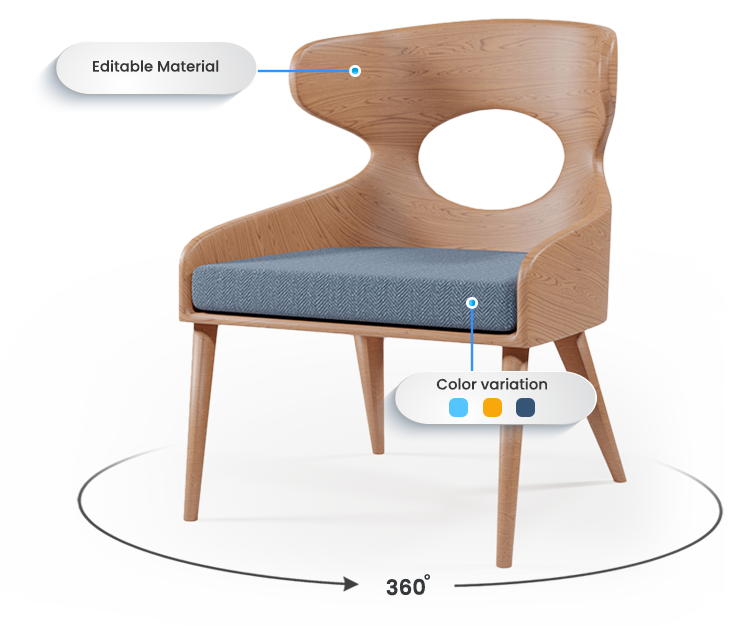
A single image is affordable, but when you need multiple angles, color variations, or lifestyle scenes, the total 3D Product Visualization Cost increases. However, working in batches often reduces the cost per image.
Turnaround Time
Faster delivery increases pricing.
Standard timelines are more cost-effective because artists can follow a normal workflow. When you need urgent delivery, the team has to prioritize your project, often working extra hours. This usually adds 20–50% to the total cost.
Experience of the Artist or Studio
Who you hire plays a big role in pricing.
Freelancers usually offer lower rates and are suitable for small or simple projects. On the other hand, experienced studios or agencies charge more but provide consistent quality, faster delivery, and better project management.
👉 In many cases, paying slightly more upfront reduces revisions and saves time.
Pricing Models Used in 3D Visualization
Different pricing models can affect how you manage and control your 3D Product Visualization Cost.
Per Image Pricing
This is the most common and straightforward model.
You pay a fixed price for each render. It works well when you know exactly how many images you need. This model makes budgeting simple and predictable
Per Project Pricing
This model is used for larger or bulk projects.
Instead of paying per image, you get a fixed price for the entire project. This is often more cost-effective when you need multiple products, angles, or variations. It also helps avoid unexpected costs.
Hourly Pricing
In this model, you pay based on the time spent on your project.
It is commonly used by freelancers, especially when the scope is not clearly defined. While it offers flexibility, the final 3D Product Visualization price can be less predictable.
Subscription Model
Some studios offer monthly subscription plans.
You pay a fixed monthly fee and receive ongoing visualization services. This is ideal for e-commerce brands or companies that regularly launch new products and need continuous content.
👉 Over time, this model can significantly reduce your overall 3D Product Visualization Cost if you have consistent needs.
Read more: How to Choose Affordable 3D Modeling Services Without Losing Quality
Cost for E-commerce Product Visualization

Most e-commerce brands spend between $100 and $5,000+ per product, depending on how many visuals, variations, and scenes they need.
For e-commerce, a single product is rarely enough. You typically need multiple angles, color variations, and sometimes lifestyle scenes to make the product look realistic and appealing. This is where 3D Product Visualization fees increase, but it also delivers better conversions and reduces the need for expensive photoshoots.
Here’s a clear breakdown of typical pricing:
E-commerce Package Type | What’s Included | Average Cost (USD) |
Basic product listing | 1–3 images, simple background | $100 – $500 |
Multiple variations | Angles + color/material options | $500 – $2,000 |
Full visualization package | Lifestyle scenes + high-end realism | $1,000 – $5,000+ |
In practical terms, if you are launching a product on Shopify or Amazon, even a mid-level investment can significantly improve how your product looks and performs.
What you should focus on:
- Start with essential angles (front, side, close-up)
- Add variations only if they impact buying decisions
- Use lifestyle scenes for premium positioning
👉 A well-planned 3D Product Visualization Cost can replace traditional photography and speed up your product launch.
Freelance vs Agency Pricing
Freelancers are cost-effective for small projects, while agencies are better for quality, speed, and scaling.
Choosing between a freelancer and an agency directly affects your 3D Product Visualization Cost and overall project experience.
Freelancers
Freelancers are a good option when your budget is limited or your project is simple.
They usually offer flexible pricing and direct communication, which makes them ideal for startups or small tasks. However, quality and delivery speed can vary depending on experience.
Key points:
- Lower cost compared to agencies
- Suitable for small or one-time projects
- Flexible and easy to communicate with
Agencies
Agencies are more structured and reliable, especially for larger projects.
They provide a full-service approach, including project management, consistent quality, and faster turnaround. While the Product Visualization price is higher, the results are usually more professional and scalable.
Key points:
- Higher cost but better quality control
- Faster delivery for bulk projects
- Ideal for brands with ongoing needs
Quick Comparison
Factor | Freelancers | Agencies |
Cost | Lower | Higher |
Quality | Varies | Consistent |
Scalability | Limited | High |
Speed | Moderate | Faster |
👉 If you’re testing a product, go with a freelancer. If you’re scaling a brand, an agency is a better long-term choice.
Cost-Effective Solutions for Startups
You can reduce your 3D Product Visualization Cost significantly by simplifying your requirements and scaling gradually.
Startups often make the mistake of investing too much too early. Instead, focus on what is necessary to launch and validate your product.
Smart Ways to Reduce Cost
- Use simple or plain backgrounds instead of lifestyle scenes
- Order fewer renders in the beginning
- Choose mid-level realism instead of ultra-photorealistic output
- Work with freelancers or small studios
- Consider subscription-based services for ongoing needs
Practical Example
Instead of ordering:
- 10 high-end renders → $3,000+
Start with:
- 3 mid-level renders → $600–$900
Then scale once you start getting sales.
Simple Cost Strategy Table
Strategy | Impact on Cost | Best Use Case |
Fewer renders | Lower total cost | Early-stage launch |
Mid-level realism | Balanced cost | E-commerce listings |
Simple backgrounds | Reduced cost | Budget projects |
Subscription services | Long-term savings | Growing brands |
👉 The goal is not to spend less-it’s to spend smart.
How to Get an Accurate Quote
The more clearly you define your requirements, the more accurate your 3D Product visualization fees will be, helping you avoid hidden fees and delays.
Many pricing issues happen because of unclear project details. When you provide complete information upfront, studios can give precise quotes, realistic timelines, and better results.
What You Need to Provide
To get a clear and reliable quote, make sure you include the following:
- Product references
Share product images, CAD files, or even rough sketches. This helps the artist understand the complexity and scope. - Number of renders
Specify how many images you need, including angles and variations. More outputs increase the total 3D Product Visualization Cost. - Quality level
Define whether you need basic, mid-level, or photorealistic visuals. This directly affects pricing. - Deadline
Mention your timeline clearly. Urgent projects usually increase cost due to faster delivery requirements. - Output type
Clarify whether you need:- Static images
- 3D animations
- Interactive 3D or configurators
Simple Quote Example
Here’s how a clear request should look:
Requirement | Example |
Product | Wooden chair (with reference images) |
Number of renders | 3 angles + 2 color variations |
Quality level | Photorealistic |
Deadline | 7 days |
Output type | High-resolution images |
Why This Matters
When you provide detailed information:
- You get accurate pricing upfront
- You reduce back-and-forth communication
- You avoid unexpected costs
- You speed up project delivery
👉 Clear input = predictable 3D Product Visualization Cost
Pro Tip
Before requesting a quote, ask yourself:
- Do I really need multiple variations right now?
- What level of realism is enough for my goal?
- Can I start small and scale later?
Answering these questions will help you control your budget while still getting high-quality results.
Read me: How to Choose Affordable 3D Modeling Services Without Losing Quality
Final Thoughts
3D Product visualization fees may seem variable, but it’s a strategic investment that delivers high returns for businesses looking to stand out online.
Understanding 3D Product Visualization Cost empowers you to make smart decisions for your brand, whether you’re planning e-commerce product listings, marketing campaigns, or interactive presentations. You’ve learned how factors like product complexity, realism, number of renders, turnaround time, and provider experience affect pricing-and how freelancers, agencies, or subscription models fit different budgets and project needs.
The next step is simple: outline your product requirements clearly and request a detailed quote from a trusted 3D visualization provider. To make this easier, create a checklist of images, angles, and quality levels before reaching out. Share your experience, ask questions in the comments, or connect with other professionals to see what works best. These steps ensure your investment delivers high-quality visuals that drive engagement, conversions, and growth.
FAQs About 3D Product Visualization Cost
1. Can 3D visualization replace photography?
Yes, it can reduce photoshoot costs and allow multiple product variations.
2. How long does a project take?
Simple renders: 1–3 days. Photorealistic or interactive: 1–4 weeks.
3. Do I need CAD files?
CAD files help accuracy, but sketches or images can work for simpler products.
4. Can I update 3D models later?
Yes, you can modify colors, textures, or small design changes without starting over.
5. Are freelancers cheaper than agencies?
Freelancers cost less for small projects; agencies offer consistent quality and faster delivery.
6. Are interactive 3D configurators worth it?
Yes, for products with options, they boost engagement and sales.
7. Can 3D visuals be used for AR?
Absolutely. 3D models can be repurposed for AR apps or virtual try-ons.
8. How to calculate ROI?
Compare cost with savings on photoshoots, faster launches, higher conversions, and fewer returns.