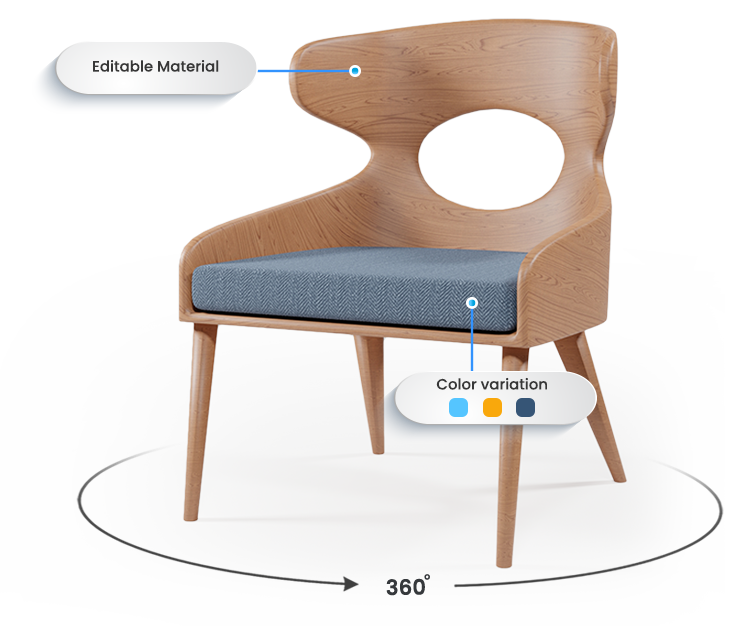
In 2026, understanding 3D furniture rendering cost isn’t just about numbers, it’s about making strategic decisions that influence your brand’s visual impact, budget planning, and competitive positioning. Whether you’re launching a new furniture line, upgrading e-commerce visuals, or pitching to investors, this guide breaks down pricing, cost drivers, service models, and budgeting tips with real-world data, comparison tables, and industry insights so you can plan smartly and confidently.
How Much Does 3D Furniture Rendering Cost in 2026?
The cost of 3D furniture rendering in 2026 ranges from $30 for simple product renders to $800+ for high-end photorealistic interior or architectural renders, depending on complexity, quality, and service type.
3D furniture rendering prices vary widely based on factors such as the type of render (product, interior, or animation), level of detail, and quality standards. Simple single-item product renders with minimal backgrounds and basic lighting are the most affordable, typically costing $30–$150 per image. Mid-range interior or room setups, with more furniture, textures, and lighting, generally cost $200–$400 per image. High-end photorealistic renders, which include advanced materials, realistic lighting, shadows, and reflections, can exceed $800 per image.
Businesses can choose between per-image pricing for smaller projects or per-project pricing for catalogs, full interiors, or animation projects. By understanding the cost range and aligning it with project complexity and quality expectations, brands can efficiently plan their rendering budget and maximize ROI.
Average 3D Furniture Rendering Price Per Image in 2026
A typical 3D furniture render per image can range widely based on quality and complexity, from roughly $30–$95 for simple product shots to $250–$800+ for interior or photorealistic lifestyle scenes in 2025, and these averages are expected to trend modestly upward in 2026 due to inflation and software sophistication.
Common per-image price bands:
Render Type | Typical 2025 Price (USD) | Notes |
Basic product on white | $30–$50 | Simple, single object |
Lifestyle/environment | $55–$95 | Includes backgrounds & props |
Architectural interior | $190–$480 | |
Architectural exterior | $270–$950 |
💡 Important: Many studios offer bulk pricing or per-project deals when you order multiple views or products, reducing the average per-image cost on larger scopes.
3D Furniture Rendering Price Range: Per Image vs Per Project
Rendering services can be priced per image, per project, or sometimes hourly, with per-image being the most common for furniture visuals.
Per Image Pricing:
- Ideal when you need specific shots (e.g., hero view, side view).
- Pricing increases with scene complexity, lighting, and rendering quality.
- Typical range for 3D furniture: $30–$95+ per view for product and lifestyle scenes.
- Per Project Pricing:
- Used for catalogs, multiple SKUs, or branded shoot series.
- Often includes planning, modeling, rendering, post-production, and sometimes revisions.
- Project pricing can scale to hundreds or thousands, depending on the number of renders, complexity, and deliverables.
- Hourly Rates:
- Some freelancers or boutique studios charge $30–$150/hr or more, depending on location and expertise.
Why can per project be cheaper:
- Volume discounts
- Fewer setup overheads per image
- Shared environments or backgrounds
Render Quality vs Pricing: Low, Medium & High-End 3D Renders
Higher-quality (photorealistic, detailed lighting & materials) always costs more than basic renders due to increased modeling time, advanced lighting setups, and longer rendering times.
Quality tiers & expected pricing:
Quality Tier | Description | Typical Range (per image) |
Basic | Simple lighting, minimal textures | |
Mid-Range | Better realism, moderate detail | |
High-End / Photorealistic | Advanced textures, lighting realism |
Key quality drivers:
- Texture realism (leather, wood grain)
- Lighting sophistication (soft shadows, HDR)
- Environmental detail (full interior vs white background)
- Higher resolution (4K and above)
Most clients find mid-range quality hits the sweet spot for furniture visuals, balancing cost with high engagement potential, especially on e-commerce and social media.
What Factors Affect 3D Furniture Rendering Cost?
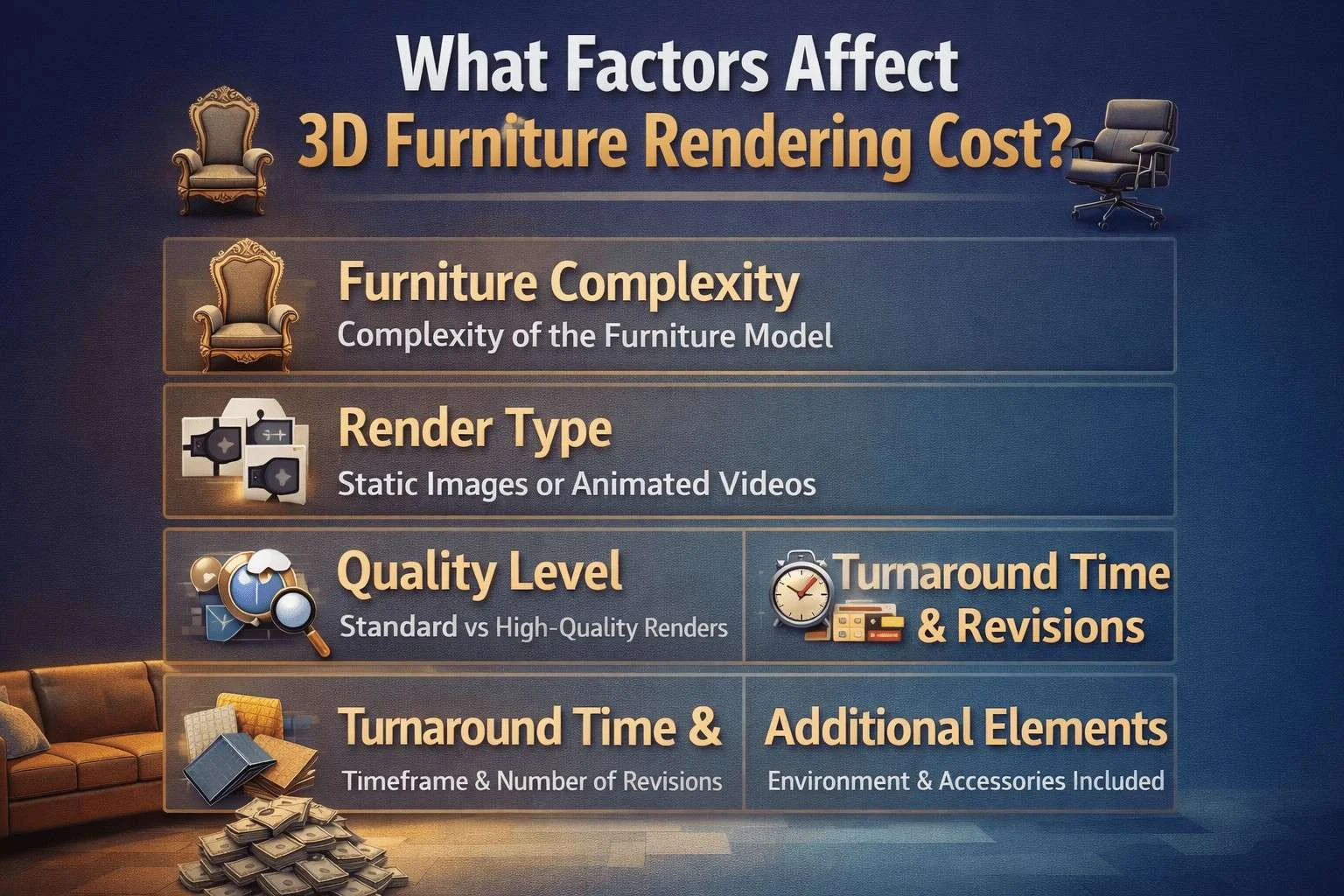
Complexity, render type, quality, and turnaround time are the main factors.
Several elements influence 3D furniture rendering costs:
- Furniture Complexity: More curves, details, and materials increase modeling time.
- Render Type: Product, interior, architectural, or animation renders vary in effort and price.
- Quality Level: Low, medium, or high-end photorealistic renders affect processing time and cost.
- Turnaround Time & Revisions: Faster deadlines and multiple revisions raise expenses.
- Additional Elements: Lighting, textures, environment setup, and the number of camera angles also impact pricing.
Understanding these factors allows businesses to estimate costs accurately and choose the right service model for their project.
Furniture Complexity, Interior Details & Architectural Elements
More detail and complexity in the furniture model and scene increases cost because it requires more 3D modeling, higher polygon counts, and refined texturing.
Bullet points on complexity drivers:
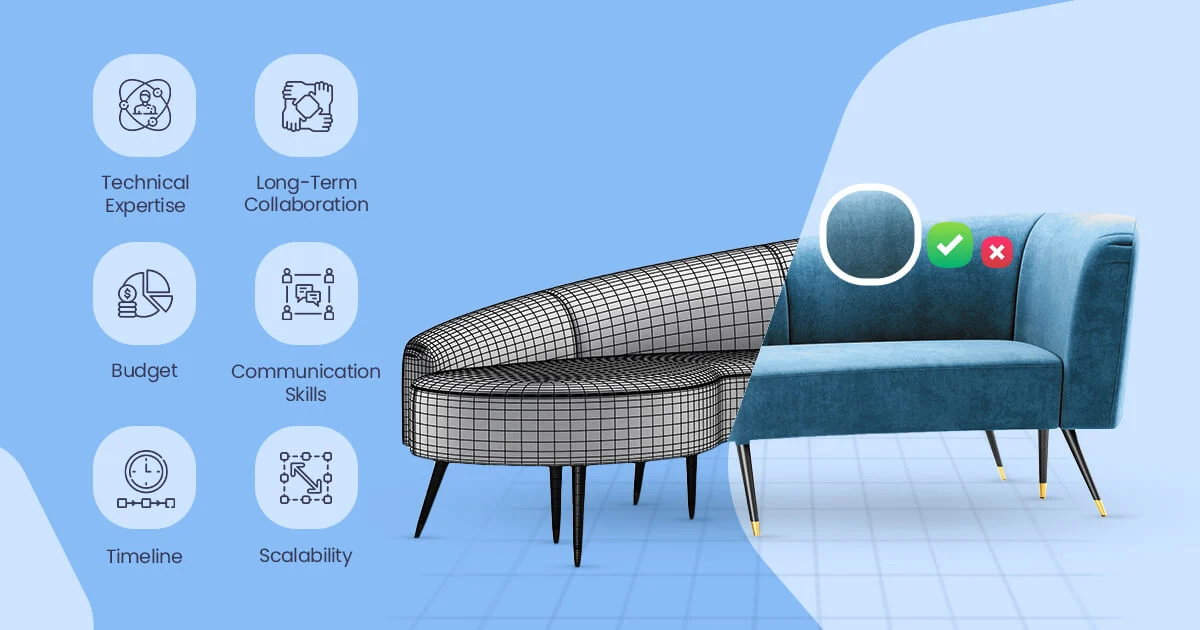
- Furniture geometry complexity: Simple chairs vs modular sofas with intricate seams.
- Material detail: Leather, glass, wood grain, and advanced shaders are costlier.
- Interior environmental elements: Walls, floors, décor, shadows, and adds modeling overhead.
- Architectural context: If the render needs full room space, lighting, and reflections.
Example: Rendering a simple table on a white background might be just $30–$50 per image, while a fully furnished modern living room scene can be several hundred dollars per image due to detailed lights & materials.
Type of Rendering: Product, Interior, Architectural & Animation
Price varies significantly by render type, product shots are cheaper than interior or architectural visualization, and animation costs more per second than still images.
Cost range by render type:
- Product 3D rendering: $30–$95+ per image for furniture product shots.
- Interior furniture & architectural visualization: $190–$950+ per image, depending on size.
- Animation/walkthroughs: Costs are often per second and range from $50–$150+ per second for standard renderings.
The more dynamic and complex the deliverable (e.g., animated walkthrough), the higher the cost due to frame count and rendering time.
Rendering Time, Revisions & Main Cost Factors in 2026
Longer rendering time, tight deadlines, and multiple revisions can significantly increase the final cost because they require more computational power and labor hours.
Key cost time drivers:
- Rendering duration: High-quality renders take hours to days per frame.
- Rush/express delivery fees: 20–50% premium for urgent turnaround.
- Number of revisions: Most studios include 1–2 minor revisions; more edits often cost extra.
Pro tip: Providing detailed briefs and references up front can cut down render iterations and reduce overall cost.
How to Budget for 3D Furniture Rendering Projects

Budgeting for 3D furniture rendering involves evaluating project size, render type, quality level, and pricing model while factoring in revisions and turnaround time to ensure cost-effective, high-quality results.
To budget effectively for 3D furniture rendering:
- Assess Project Scope: Determine the number of images, interiors, or animations needed.
- Select Render Quality: Decide between low, medium, or high-end photorealistic renders.
- Choose Pricing Model: Per image for small projects, per project for catalogs or interiors.
- Consider Cost-Saving Options: Provide CAD files, use simpler backgrounds, and batch renders to reduce expenses.
- Factor in Revisions & Turnaround: Allocate additional budget for changes or rush deadlines.
By evaluating these aspects, businesses can maximize quality while controlling costs.
Average Cost of 3D Furniture Rendering Projects: Price Guide for 2026
Average project costs vary widely, from a few hundred dollars for small catalog shoots to several thousand for large interior or architectural visualization projects.
Budget table (2025 baselines, projected into 2026):
Project Type | Typical Cost Range | Typical Delivery |
Single product render | $30–$95 | 1–3 days |
Multiple furniture views (catalog) | $300–$1,000+ | 5–10 days |
Full room interior | $190–$800+ | |
Architectural scene | $270–$950+ | |
Animation | $50–$150+ per second |
Budget tip: For catalogs, ordering batch renders lowers the average per-image cost because studios often provide volume discounts.
Affordable 3D Furniture Rendering: Cost-Saving Without Losing Render Quality
You can reduce costs without compromising too much on quality by optimizing your brief, reusing assets, simplifying environments, and choosing appropriate quality tiers.
Cost-saving strategies:
- Provide clear references and files (CAD, sketches, photos) upfront.
- Use simplified scenes instead of fully detailed interiors to focus on the product.
- Negotiate bulk pricing for multiple views or catalog orders.
- Choose experienced freelancers or offshore studios with quality portfolios.
Comparing 3D Rendering Services Cost & Pricing Models
Different studios use different pricing models: per image, hourly, or per project. Each has pros and cons depending on your project size and needs.
Comparison table:
Pricing Model | Best For | Pros | Cons |
Per image | Single shots, product renders | Clear pricing | It can be high if many images |
Per project | Catalogs, multi-views | Predictable total cost | Requires detailed scoping |
Hourly | Flexible, evolving scope | Pay for actual work | Harder to estimate upfront |
Professional 3D Furniture Rendering Services
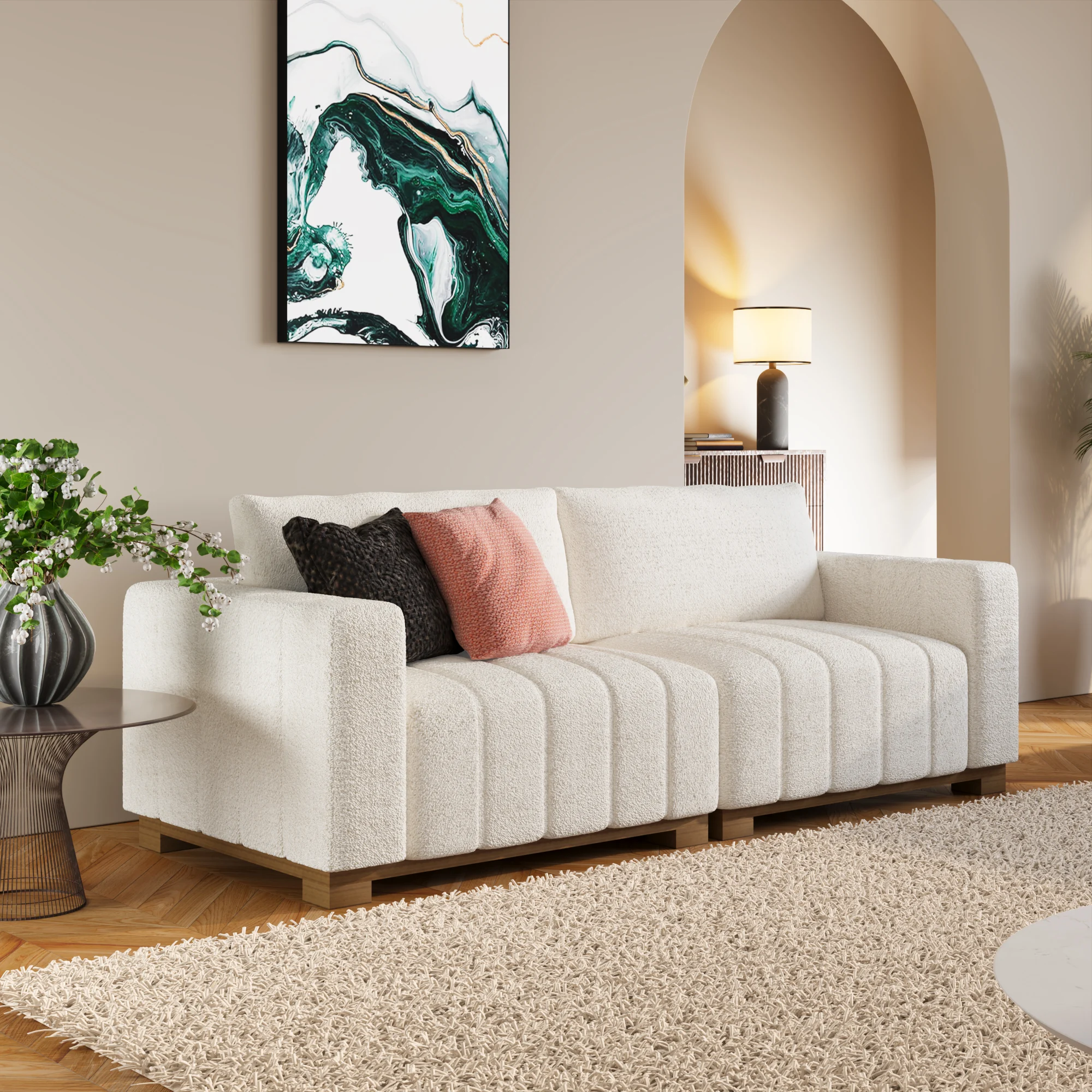
Professional 3D furniture rendering services provide high-quality, ready-to-use visuals, including modeling, texturing, lighting, and post-production, to showcase furniture effectively.
These services offer end-to-end solutions for furniture brands:
- Comprehensive 3D Modeling: Accurate representation of furniture shapes, materials, and textures.
- Lighting & Rendering: Realistic lighting setups to enhance photorealism and product appeal.
- Post-Production & Revisions: Color correction, background adjustments, and minor revisions included.
- Time & Cost Efficiency: Saves the cost and time of physical photoshoots, especially for large catalogs.
- Marketing & ROI Benefits: High-quality visuals improve online sales, ad performance, and brand perception.
Professional services are ideal for businesses aiming for consistent, polished, and market-ready renders.
What’s Included in Professional 3D Furniture Rendering Services Pricing
Professional 3D furniture rendering services usually offer a comprehensive package that goes beyond just the final image. Typical inclusions are:
- 3D Modeling: Converting CAD, sketches, or images into fully detailed 3D models.
- Texturing & Materials: Applying realistic textures, shaders, and material properties.
- Lighting Setup: Accurate scene lighting for photorealistic results.
- Rendering: High-resolution still images or animations.
- Post-Production: Color correction, shadow refinement, reflections, and final touch-ups.
- Revisions: Minor adjustments or modifications based on client feedback.
Why this matters: Even if you pay a bit more for professional services, you get a polished, ready-to-use asset that can be applied across e-commerce, marketing campaigns, and catalogs.
Freelancers vs Agencies: 3D Rendering Service Cost Comparison
Agencies typically charge more than freelancers, but they offer better reliability, project management, and team expertise.
Service Type | Average Cost (per image) | Pros | Cons |
Freelancer | $30–$150 | Affordable, flexible, quick communication | Limited backup, fewer revisions |
Agency | $150–$800+ | Full-service, high-quality, multiple revisions, project management | Higher upfront cost, less flexible for small tasks |
Some agencies, such as Orbe3D, have introduced pricing starting at $70, along with special discounts.
Tip: For small businesses or single product renders, freelancers are cost-effective. For catalogs, e-commerce websites, or full interior visualizations, agencies provide better ROI.
Benefits of 3D Visualization for Furniture Brands & ROI Impact
- Enhanced Marketing: Photorealistic images increase engagement and click-through rates.
- Reduced Physical Sample Costs: No need to produce multiple prototypes for photoshoots.
- Faster Time-to-Market: Virtual renders can be completed faster than photography setups.
- Global Accessibility: Easily showcase products online with multiple angles and scenes.
- High ROI: Lower cost per image with long-term use in catalogs, social media, and ads.
3D visualization is particularly valuable for furniture brands launching new collections or testing different design concepts before production.
In-House vs Outsourced Furniture Rendering Cost Comparison
In-house rendering offers control but higher fixed costs, while outsourcing provides flexibility and potentially lower per-project expenses.
Feature / Factor | In-House Rendering | Outsourced Rendering |
Initial Investment | High – software licenses ($1,500–$5,000), hardware ($2,000–$10,000+), salaries | Low – pay per image/project, no hardware/software cost |
Control | Full control over workflow, revisions, and quality | Limited control, depends on communication with the vendor |
Cost per Image/Project | Fixed internal cost, may be higher for small projects | $30–$150 for product, $200–$800+ for interiors, per image/project |
Scalability | Harder to scale quickly without hiring | Easy to scale, can handle large or sudden projects |
Turnaround Time | Depends on team size and workload | Often faster for small to medium projects, depending on the vendor |
Flexibility | Limited by internal resources | Highly flexible, choose a vendor based on project type |
Revisions | Quicker internal revisions | May require extra time/cost depending on contract |
Best For | Large enterprises with frequent rendering needs | Small to medium businesses, one-off or specialized projects |
Explanation:
Choosing between in-house and outsourced 3D rendering depends on business scale, frequency of projects, and budget:
- In-House Rendering:
- Costs: Software licenses ($1,500–$5,000/year), hardware ($2,000–$10,000+), team salaries ($40k–$80k/year).
- Pros: Full control over workflow, faster internal revisions, and asset reusability.
- Cons: High upfront and ongoing expenses.
- Outsourced Rendering:
- Costs: Per image ($30–$150 for product, $200–$800+ for interiors) or per project ($1,000–$5,000+ for catalogs/animations).
- Pros: Flexible, scalable, no need for software/hardware investment.
- Cons: Less control, communication may affect revisions.
- Choosing the Right Option:
- Small businesses often outsource per image.
- Mid-size may use a hybrid approach.
- Large enterprises benefit from in-house teams for bulk renders, with outsourcing for specialized projects.
Effective comparison helps businesses balance quality, speed, and cost.
In-House 3D Furniture Rendering Cost: Software, Team & Rendering Process
In-house rendering can be costly initially due to software licenses, team salaries, and hardware, but it may reduce per-project cost over time for frequent projects.
Cost Components:
- Software Licenses: $1,500–$5,000/year for high-end 3D software.
- Hardware: High-performance PCs or rendering workstations ($2,000–$10,000+).
- Team Salaries: 3D artists typically $40–$80k/year, depending on expertise.
- Maintenance & Updates: Plugins, rendering farm subscriptions, and software updates.
When in-house works best:
- Companies producing frequent renders.
- Need for quick iterations or revisions.
- Maintaining full control over the process and IP.
Outsourced 3D Rendering Services Cost: Per Image & Per Project
Outsourcing provides flexibility and lower upfront costs but usually has higher per-image pricing compared to in-house setups.
Typical Pricing:
Render Type | Per Image Cost | Project Cost (Multiple Images) |
Product Rendering | $30–$150 | $300–$1,000+ |
Interior Visualization | $200–$800+ | $1,000–$5,000+ |
Animation | $50–$150+ per second | $1,500+ per project |
Benefits:
- No hardware or software investment.
- Access to experienced specialists.
- Quick scalability for larger projects.
Choosing the Right Pricing Model Based on Business Scale
- Small businesses/startups: Outsource per image to avoid fixed costs.
- Mid-size / growing brands: Hybrid approach, outsource complex projects, keep simple renders in-house.
- Large enterprises: In-house team for bulk production, outsource high-end visualizations for specialized work.
This strategic approach optimizes cost while maintaining high-quality output.
Comparing 3D Rendering With Traditional Photography
3D rendering and traditional photography both serve to showcase furniture, but they differ in cost, flexibility, and scalability. Understanding these differences helps businesses choose the right method for marketing and product visualization.
Cost of 3D Rendering vs Photography for Furniture Products
3D rendering is often cheaper than professional photography for large product catalogs due to avoiding studio setup and multiple shoots.
Comparison Table:
Cost Factor | 3D Rendering | Photography |
Studio Setup | Minimal | $500–$2,000 per day |
Props & Backdrops | Digital / Reusable | Physical purchase |
Product Samples | Not needed | Required for all shots |
Post-Production | Included | Additional editing costs |
Turnaround Time | 1–7 days per batch | 3–14 days depending on setup |
Observation: For small-scale single products, photography may be cheaper. For catalogs or e-commerce stores with multiple SKUs, 3D rendering is more cost-effective.
3D Visualization Benefits Over Photography in 2026
- Unlimited Angles & Views: Change camera angles without reshooting.
- Consistent Quality: Lighting and textures remain uniform across all images.
- Easy Revisions: Update colors, materials, or environment digitally.
- Animation & Interactive 3D Models: Impossible with traditional photography.
- Global Accessibility: Immediate online sharing and virtual staging.
When Photography Costs Less Than 3D Rendering
- Single, simple product shots without complex backgrounds.
- Quick one-off campaigns where realism is less critical.
- Brands that already have studio equipment and in-house photographers.
For long-term scalability and high-quality online marketing, 3D rendering often offers better ROI despite a higher initial cost for complex projects.
Research shows that switching from traditional photography to 3D rendering can reduce visual production costs by up to ~70% and generate significant increases in online conversions and engagement because customers interact more and trust the product visuals more.
Use Cases for 3D Furniture Rendering
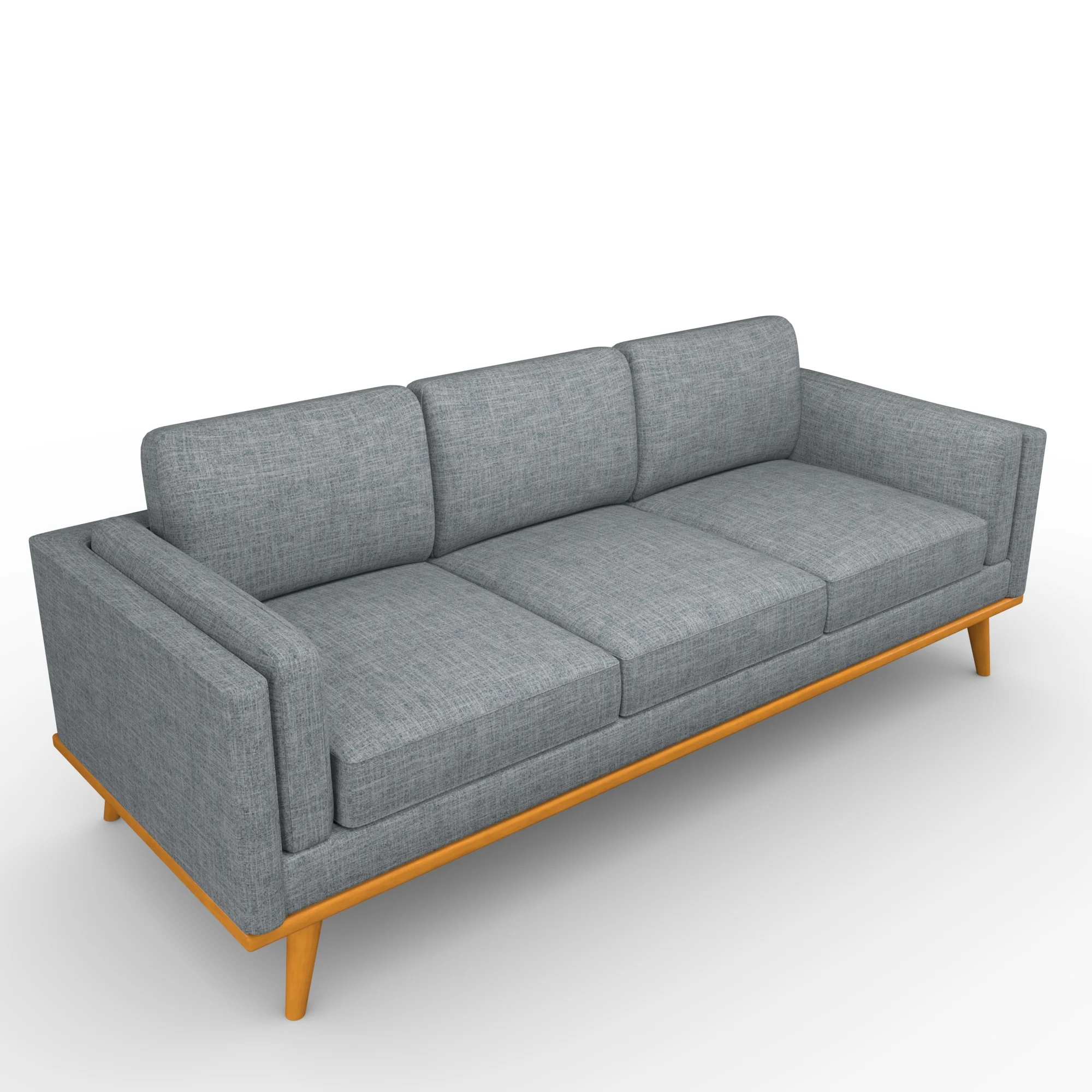
3D furniture rendering is versatile and can be applied across multiple business needs, from e-commerce to marketing campaigns. It allows brands to visualize products realistically, create immersive experiences, and reduce costs associated with physical photography or prototyping.
Product Rendering for E-commerce, Catalogs & Interior Design
Product rendering allows furniture brands to showcase items digitally with high realism, eliminating the need for costly physical photoshoots.
Use cases:
- E-commerce websites: Display multiple angles and 360° views.
- Catalogs & brochures: Uniform, photorealistic visuals for print and digital media.
- Interior design mockups: Integrate furniture into room layouts before production.
Benefits:
- Quick turnaround for large SKU inventories.
- Easy updates to colors, materials, or styles without re-shooting.
- Consistent branding across all product visuals.
Architectural Visualization & Interior Rendering for Marketing
Interior and architectural visualization elevates marketing by showing furniture in real-life contexts.
Applications:
- Showroom visualization: Showcase products within realistic interior spaces.
- Marketing campaigns: Use lifestyle settings for advertisements or social media.
- Virtual staging: Stage properties digitally with furniture for real estate marketing.
Impact on ROI:
- Reduces the cost of physical staging.
- Enhances customer understanding of product scale and style.
- Supports pre-sales marketing campaigns for upcoming collections.
Animation & 3D Visualization for Ads, AR & Presentations
3D animation and interactive visualization provide dynamic engagement that static images cannot achieve.
Use cases:
- Ad campaigns: Product motion and dynamic lighting capture attention.
- AR / VR applications: Let customers place furniture in their own spaces virtually.
- Investor & client presentations: Immersive walkthroughs of furniture collections or interior concepts.
Key advantages:
- Higher engagement and time-on-page for digital platforms.
- Improved understanding of product details, textures, and materials.
- Flexibility to reuse assets across multiple platforms
Long-Tail and Niche Rendering Cost Questions
Long-tail and niche queries help businesses understand specific 3D rendering costs for unique project types, ensuring accurate budgeting and informed decision-making. These questions often address specialized needs like architectural visualization, animations, or custom projects.
Cost of Architectural Rendering vs Furniture Visualization
Architectural renders are usually more expensive than standalone furniture renders because they require larger scenes, multiple furniture pieces, detailed lighting, and spatial accuracy.
Cost comparison table:
Render Type | Complexity | Average Cost per Image |
Furniture Product | Single item, simple background | $30–$150 |
Interior Scene | Full room with furniture | $200–$800+ |
Architectural Exterior | Building, landscaping, environment | $400–$950+ |
Factors driving cost include scene size, lighting complexity, number of objects, and required realism.
3D Animation Rendering Cost Per Project in 2026
Animation costs are calculated per second of footage and vary based on quality, complexity, and duration.
Typical price range:
- Basic animation: $50–$100 per second for simple object rotations.
- Mid-range animation: $100–$250 per second for interior walkthroughs.
- High-end photorealistic animation: $250–$600+ per second for complex scenes with multiple objects, lighting, and camera movements.
Tips to control cost:
- Limit animation duration to essentials.
- Reuse 3D assets across multiple shots.
- Predefine camera paths and motion before rendering.
Custom Rendering Projects: Pricing, Time & Cost Factors
Custom 3D rendering projects are priced based on complexity, number of renders, deadline, and revisions required.
Key cost factors:
- Furniture and environment complexity: More details = higher cost.
- Render quality: Low, medium, high-end photorealistic tiers.
- Number of revisions: Extra iterations increase labor and rendering time.
- Delivery timeline: Rush projects can cost 20–50% more.
Budgeting tip: Detailed briefs with references and material specifications reduce unnecessary revisions and save both time and money.
FAQ: 3D Furniture Rendering Cost 2026
Q1: How much does it cost?
A: $30–$800+, depending on complexity and quality.
Q2: What pricing models exist?
A: Per image, per project, or hourly/milestone.
Q3: Why does cost vary?
A: Complexity, render type, quality, and turnaround time.
Q4: What’s included in the price?
A: Modeling, texturing, lighting, rendering, post-production, and revisions.
Q5: Does turnaround affect cost?
A: Yes, faster deadlines increase the price.
Q6: Is it worth it?
A: Yes, for realistic visuals, marketing, and reduced photography costs.
Final Thought
3D furniture rendering in 2026 is more than just a digital image; it’s a strategic investment that enhances brand presentation, accelerates marketing, and reduces production costs. By understanding pricing, cost factors, service options, and practical budgeting strategies, furniture businesses can achieve high-quality visual assets that maximize ROI, engage customers, and stay competitive in an increasingly digital marketplace. Whether using product renders, interior visualizations, or animations, smart planning ensures your investment in 3D rendering pays off both creatively and financially.