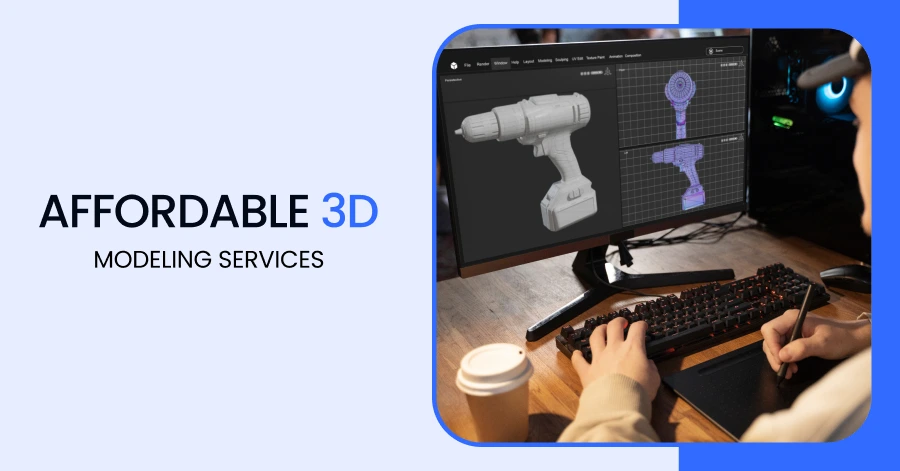
In this guide, I focus on affordable 3D modeling services and how businesses can get high-quality 3D modeling without overspending. Many teams still believe lower cost means lower quality, but that’s no longer true. With the right approach, budget-friendly 3D modeling can deliver professional results for product, furniture, and design projects.
I see this challenge often in competitive USA and Europe markets–leaders need speed, accuracy, and consistent visuals while controlling costs. Today, smarter workflows make it possible to balance quality and budget, with 3D modeling costs in 2026 ranging from a few hundred to a few thousand dollars, depending on complexity.
In this blog, I’ll explain how affordable 3D modeling works, how to evaluate quality, understand pricing, and choose the right provider with confidence.
Pricing and Cost Breakdown for Low-Cost 3D Modeling Services
When I evaluate low-cost 3D modeling services, I always start with pricing clarity. Budget-friendly 3D modeling doesn’t mean guessing costs; it means understanding what drives pricing, what’s included, and where you can optimize without risking quality. This section breaks pricing down in a practical, decision-maker–friendly way.
Factors Influencing Pricing in Professional 3D Modeling Services
In professional 3D modeling services, pricing is mainly influenced by:
- Model complexity and level of detail
- Number of views, renders, or animations
- Revisions and feedback cycles
- File formats and technical requirements
- Turnaround time and delivery speed
From a budget perspective, I’ve found that clear briefs and defined use cases reduce revisions and costs more than anything else.
Average Rates and Regional Insights for the USA & Europe
In 2026, budget-friendly 3D modeling rates typically fall into these ranges: USA-based teams often pay slightly higher rates due to overhead, while Europe offers a broader mix of mid-range pricing and specialized studios. Planning regionally helps control delivery costs without lowering standards.
3D Modeling Cost Breakdown (USD & EUR)
Model Type | Typical Cost (USD) | Typical Cost (EUR) |
Basic 3D models | $500 – $1,200 | €450 – €1,100 |
Mid-level product models | $1,200 – $2,500 | €1,100 – €2,300 |
Complex or high-detail models | $2,500 – $5,000+ | €2,300 – €4,800+ |
Optional note:
Prices may vary depending on model complexity, number of revisions, and project requirements.
Calculating Costs for Custom 3D Modeling Solutions and 3D Product Modeling Services
For custom 3D modeling solutions and 3D product modeling services, I recommend calculating costs based on:
- One-time asset creation vs reusable models
- Short-term campaigns vs long-term product lines
- Single product vs bulk SKUs
Custom work costs more upfront, but it often lowers long-term marketing and prototyping expenses, especially for growing product-driven businesses.
Negotiation Tips for Cost-Effective 3D Design Services
To secure cost-effective 3D design services, I focus on:
- Transparent pricing (no hidden revision or export fees)
- Bulk or ongoing project discounts
- Clear scope agreements before production starts
- Long-term partnerships instead of one-off jobs
Well-structured engagements usually lead to better rates, faster delivery, and more consistent quality over time.
Finding Reliable Providers of 3D Modeling Services Online
When I look for 3D modeling services online, I’m not just searching for low prices, I’m looking for reliability, process maturity, and predictable quality. In 2026, businesses in the USA and Europe have more options than ever, but that also means a higher risk if the provider isn’t vetted properly. The key is knowing where serious teams operate and how to separate professional studios from short-term vendors.
This section breaks down how I find a reliable 3D modeling agency or an affordable 3D design company without wasting time or budget.
Top Platforms for Low-Cost 3D Modeling Services
For low-cost 3D modeling services, I start with platforms where skilled teams actively showcase real work-not just samples made for marketing.
The most effective places include:
- Studio websites that clearly explain their workflow and industries
- Curated talent platforms with verified portfolios
- LinkedIn, where established studios share case studies and client work
What I look for isn’t just visual style,t’s consistency across multiple projects. If a provider can deliver the same quality across furniture, product, or architectural models, that’s a strong signal they can scale.
USA & Europe-Focused Searches for Reliable 3D Modeling Agencies
When projects target the USA or European markets, I refine searches to find a reliable 3D modeling agency with regional experience.
From my experience:
- USA-based agencies often excel at brand alignment, communication speed, and tight deadlines
- Europe-based studios usually offer a strong balance between cost control and design precision
Regional focus helps reduce friction around time zones, contracts, and quality expectations-especially for long-term partnerships.
Freelance vs Agency Options in Professional 3D Modeling Services
In professional 3D modeling services, choosing between freelancers and agencies directly affects delivery.
I usually think of it this way:
- Freelancers are best for small, well-defined tasks with minimal revisions
- Agencies are better for ongoing work, multiple assets, and structured pipelines
If a project involves frequent feedback, multiple stakeholders, or strict brand rules, agencies provide better stability and accountability.
Freelancer vs Agency: Cost, Time, Quality, and ROI Comparison
Factor | Freelance | Agency |
Cost | $25–$150/hr | $70–$200+/hr |
Project Price | $200–$1500 | $1500+ |
Time | Fast for small jobs; depends on availability | Predictable for medium/large projects |
Risk | Higher (delays, inconsistency) | Lower (team backup, processes) |
Quality | Varies | Consistent |
ROI | Good for simple projects | Higher for complex/long-term projects |
Review & Vetting Strategies for Affordable 3D Design Companies
Before working with an affordable 3D design company, I follow a simple vetting process to reduce risk:
- Review full project case studies, not just hero images
- Look for client testimonials that mention timelines and communication
- Test responsiveness during early conversations
- Confirm pricing clarity, revision limits, and file ownership
Clear answers early usually mean smoother delivery later.
My takeaway:
In 2026, finding reliable 3D modeling partners online isn’t about choosing the cheapest option, It’s about choosing teams with proven systems. When you combine the right platforms, regional insight, and careful vetting, you can secure high-quality, budget-friendly 3D modeling services that scale with your business.
Ensuring High-Quality 3D Modeling in Budget-Friendly Options
I often hear the same concern from creative leaders: can budget-friendly options really deliver high-quality 3D modeling? In my experience, the answer is yes if quality controls are built into the process. Cost efficiency should come from smarter workflows and experienced teams, not from cutting corners. In this section, I’ll show how I evaluate quality, protect brand standards, and still work with scalable, cost-effective partners.
Quality Checks and Portfolio Evaluation for Custom 3D Modeling Solutions
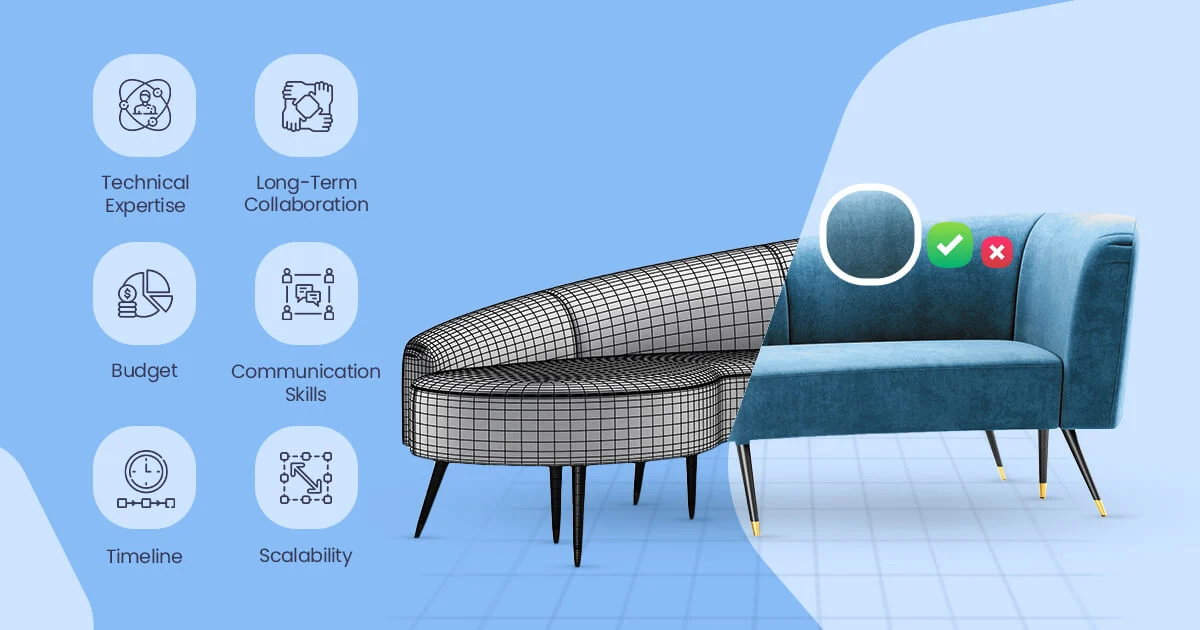
When reviewing custom 3D modeling solutions, I go beyond surface-level visuals. I look closely at:
- Mesh cleanliness, topology, and edge flow.
- Texture resolution and UV consistency.
- Lighting and material realism across multiple assets.
A strong portfolio shows repeatable quality, not just one standout render. Consistency across different product types is the clearest sign that the team can meet technical standards at scale.
Verifying Expertise in 3D Product Modeling Services
For 3D product modeling services, visual consistency matters as much as realism. I check whether models align with:
- Brand guidelines and reference imagery
- Real-world proportions and materials
- E-commerce or marketing usage requirements
Teams that understand product storytelling, not just modeling, are far more reliable for long-term creative needs.
Red Flags and Assurance Methods in Reliable 3D Modeling Agencies
When selecting a reliable 3D modeling agency, I watch for early warning signs:
- Vague answers about process or revisions
- No clear ownership or usage rights
- Over-promising timelines at unrealistically low prices
To protect quality and safeguard intellectual property, I always use NDAs (Non-Disclosure Agreements). NDAs ensure that:
- Your designs and concepts stay confidential
- Assets created for your project can’t be reused or shared elsewhere
- IP ownership is clearly defined before work begins
Along with NDAs, I confirm approval checkpoints, clear revision policies, and IP terms. These steps give me confidence that the agency will deliver high-quality results without compromising my brand.
Revisions, Testing, and Approval Workflows for High-Quality 3D Modeling
High-quality outcomes depend on structured workflows. I look for partners who provide:
- Defined revision rounds with a clear scope
- Test renders for early feedback
- A documented approval process for all assets
These controls ensure high-quality 3D modeling without scope creep, delays, or unexpected costs-even when working on a budget.
Key takeaway:
Quality doesn’t disappear when budgets tighten. By validating skills, enforcing clear workflows, and using NDAs and IP agreements with a reliable 3D modeling agency, it’s possible to achieve premium-level results without breaking the bank.
Freelancers vs Agencies – Choosing 3D Modeling Services for Businesses
When I help businesses select 3D modeling services for businesses, the first question I ask is: Do we need a freelancer or an agency? The answer depends on project size, complexity, and long-term goals. Both options have their place, but understanding their strengths and trade-offs ensures you get high-quality results at a budget-friendly rate without unnecessary risk.
Pros and Cons of Freelance Low-Cost 3D Modeling Services
Freelancers are ideal when you’re looking for low-cost 3D modeling services for small or well-defined projects:
Pros:
- Lower rates than agencies
- Flexible hours and quick turnaround for short-term work
- Direct communication with the artist
Cons:
- Limited capacity for large-scale or complex projects
- Less structured processes, which can affect consistency
- Risk of missed deadlines or dependency on one individual
For bootstrapped startups, freelancers can deliver excellent results if the scope is clear and expectations are well-managed.
Agency Advantages in Scalable Budget-Friendly 3D Modeling
Agencies shine for budget-friendly 3D modeling that scales with your business:
- Access to teams with diverse skills and specializations
- Structured pipelines for multiple assets or ongoing projects
- Accountability and reliability across deadlines
While the upfront cost may be higher than a freelancer, agencies provide long-term value and reduced risk for large product lines or multi-channel campaigns.
Contracts, Turnaround, and Support in Cost-Effective 3D Design Services
When I choose a provider, I evaluate contracts, turnaround, and support for cost-effective 3D design services:
- Clear deliverables and milestones in contracts
- Agreed-upon timelines for revisions and delivery
- Dedicated support or project management
These safeguards prevent delays, ensure technical compliance, and protect intellectual property—critical when scaling operations or integrating 3D assets into digital platforms.
When to Scale from Freelancer to Agency
(For Creative Directors – Growth Planning)
I recommend moving from freelancer to agency when:
- Projects increase in size or complexity
- Multiple stakeholders require consistent quality and approvals
- You need faster turnaround without sacrificing accuracy
- Long-term creative scaling is planned across products or campaigns
Agencies provide the stability, processes, and skill diversity needed for professional 3D modeling services that support growth.
Note: Freelancers suit small, flexible projects, while agencies provide scalability, accountability, and long-term value. The right choice depends on project size, complexity, and growth needs, ensuring quality without wasting budget.
Decision-Making Guides and Final Steps for Affordable 3D Modeling Services
Choosing affordable 3D modeling services is about balancing cost, reliability, and quality so your team can move quickly without creating future problems. This guide provides practical frameworks for decision-making, evaluation, and scaling 3D modeling partnerships.
1. Key Questions to Ask Providers of Custom 3D Modeling Solutions
When evaluating custom 3D modeling solutions, your goal is to ensure the vendor fits your digital strategy—not just your current project. Ask questions in these categories:
Strategic Fit and Experience
- What industries and asset types do you specialize in (product, furniture, architecture, real-time, marketing visuals)?
- Can you show 3–5 recent projects similar to ours (same market, channels, complexity)?
- How have your 3D assets impacted performance metrics such as CTR, conversion rate, or engagement?
Process, Communication, and Control
- What does your end-to-end workflow look like—from brief to final delivery?
- Who will be my main point of contact, and how often will we communicate?
- How do you handle scope changes or mid-campaign adjustments?
Briefing, Formats, and Technical Standards
- Which formats do you deliver by default (FBX, OBJ, GLB, USDZ, native formats)?
- What information do you need from us to start (brand guidelines, polycount targets, use cases, platform constraints)?
- How do you optimize assets for web, mobile, AR, or configurators?
Timelines, Capacity, and Scalability
- What are your average turnaround times for simple vs. complex assets?
- How many models can you deliver per week/month without quality drop?
- How do you scale if we need 2–3x more work for a campaign or seasonal spike?
Risk, Guarantees, and IP
- What is your revisions policy (rounds allowed, what counts as a revision vs. a new request)?
- How do you handle delays or missed milestones?
- Who owns the final 3D assets and source files, and what licensing terms apply?
Tip: If a provider cannot answer these clearly, they are unlikely to be a long-term digital partner.
2. Hiring Checklists for Selecting Reliable 3D Modeling Agencies
As a Studio Head, you need a reliable agency that integrates into your pipeline with minimal friction. Use this checklist to move from “nice portfolio” to “trusted production partner.”
Portfolio and Capability
- Strong, recent work in key categories (products, interiors, stylized vs. photoreal).
- Consistent quality across multiple projects, not just hero pieces.
- Demonstrated understanding of topology, UVs, PBR texturing, lighting, and rendering.
Pipeline Compatibility
- Familiar with your primary tools (Maya, Blender, 3ds Max, ZBrush, Substance, Unreal, Unity, etc.).
- Able to follow naming conventions, folder structures, and versioning practices.
- Can deliver test files for compatibility with your render engine or real-time environment.
Production Reliability
- Clear project management approach (Jira, Trello, Asana, or similar).
- Transparent capacity: number of artists, seniority mix, backup plans.
- Predictable delivery windows, with a documented history of meeting deadlines.
Communication and Responsiveness
- Prompt response times during your working hours.
- Structured feedback loops with tracking and confirmation of changes.
- Ability to work with annotated screenshots, videos, or review tools.
Contracts, Pricing, and Risk Control
- Written agreements covering scope, rates, overtime, rush fees, and revision limits.
- Clear NDAs and IP clauses protecting your studio and clients.
- Simple, predictable invoicing with no hidden costs.
Tip: If an agency meets most of these criteria in a small pilot, you can confidently scale to larger projects.
3. ROI and Partnership Evaluation for High-Quality 3D Modeling
At the executive level, the focus is not just cost but return on investment. Evaluate potential partners through three lenses:
Financial ROI
- Revenue impact: Did 3D assets improve conversions, average order value, or upsell/cross-sell?
- Cost efficiency: Do assets reduce photography, prototyping, or logistics costs?
- Lifetime value: Can assets be reused across channels without major rework?
Operational ROI
- Speed: Has the time-to-market for campaigns or launches decreased?
- Flexibility: Can visuals be updated quickly when pricing, packaging, or features change?
- Reliability: Are teams spending less time resolving quality or delivery issues?
Strategic ROI
- Brand impact: Do visuals reinforce desired positioning (premium, innovative, sustainable)?
- Competitive edge: Are you ahead in 3D adoption, configurators, or immersive experiences?
- Partnership potential: Can this vendor support AR commerce, virtual showrooms, or real-time experiences?
Tip: A partner that consistently improves speed, quality, and reuse while managing costs is worth retaining long-term.
4. Next Steps to Secure Budget-Friendly 3D Modeling Without Quality Loss
Follow this sequence to move from intent to action while maintaining quality:
- Clarify Your Requirements
- Define primary use cases (e-commerce spins, hero imagery, AR try-ons, pitch decks).
- Set baseline technical requirements (polycount, target platforms, formats).
- Decide what “good enough” vs. “must be perfect” means.
- Define primary use cases (e-commerce spins, hero imagery, AR try-ons, pitch decks).
- Shortlist 3–5 Providers
- Filter by domain experience, portfolio quality, time zone, and communication.
- Favor providers with work similar to your desired output.
- Schedule short discovery calls to test fit and responsiveness.
- Filter by domain experience, portfolio quality, time zone, and communication.
- Run a Small Paid Pilot
- Start with 1–3 representative assets at typical complexity.
- Use the same brief for all providers to compare fairly.
- Evaluate quality, turnaround, feedback handling, and cost per usable asset.
- Start with 1–3 representative assets at typical complexity.
- Compare Results and Decide Partnership Model
- Choose the provider that balances quality, speed, and price—not just the cheapest.
- Decide between per-asset, per-batch, or monthly retainer for ongoing work.
- Negotiate clear SLAs, revision rules, and delivery schedules.
- Choose the provider that balances quality, speed, and price—not just the cheapest.
- Standardize and Scale
- Document briefs, review processes, and asset standards.
- Gradually increase volume as trust and efficiency grow.
- Reassess performance quarterly to ensure alignment with objectives.
- Document briefs, review processes, and asset standards.
Following this process, you can secure affordable 3D modeling that supports your brand long-term, without sacrificing the quality your customers see on screen.
Comprehensive FAQs on Affordable 3D Modeling Services:
Q: What is affordable 3D modeling, and can it still be high quality?
It delivers professional-quality 3D assets at lower costs by optimizing tools and workflows without sacrificing realism.
Q: How much does 3D modeling cost, and are there hidden fees?
Costs vary by complexity and volume. Transparent providers define pricing, revisions, and licensing upfront.
Q: Which industries commonly use affordable 3D modeling services?
Furniture, e-commerce, architecture, real estate, gaming, AR/VR, and digital marketing industries use it widely.
Q: What software is used for professional 3D modeling?
Blender, Maya, 3ds Max, ZBrush, Substance Painter, Unreal Engine, and Unity are commonly used.
Q: What file formats are provided, and can 3D models be reused across platforms?
FBX, OBJ, GLB, and USDZ formats are common. Models can be reused across web, e-commerce, AR/VR, and marketing platforms.
Q: How fast is the delivery, and can projects scale on a budget?
Simple models take days; complex ones take longer. Scalable workflows support high volumes cost-effectively.
Q: Do affordable 3D modeling services include revisions?
Most services include 2–3 revision rounds; additional changes may cost extra.
Q: How do 3D models improve ROI and support marketing?
They reduce prototyping costs, increase engagement, boost conversions, and enable multi-channel reuse.
Q: Can I hire 3D modelers remotely, and how do I choose the right service?
Yes. Check portfolios, communication, pricing clarity, and start with a small pilot project.
Q: What determines 3D model complexity?
Polygon count, texture detail, realism level, animation, and target platform determine complexity.
Q: How can I ensure compatibility with my workflow or platform?
Share requirements early and request test files before full production.
Q: Are licensing, ownership, and usage rights included?
Most agencies define IP rights clearly and often provide full ownership of final assets.
Q: How can I test a 3D modeling service before full commitment?
Begin with a small paid test involving 1–3 assets.
Q: Can affordable 3D models be reused for future projects?
Yes. Well-structured models can be reused across multiple platforms and campaigns.
Conclusion
Affordable 3D modeling services don’t mean sacrificing quality. With the right pricing strategy, careful provider evaluation, and a structured production workflow, businesses in the USA and Europe can achieve high-quality 3D modeling that supports growth, speed, and long-term ROI. The real advantage comes from choosing partners who combine technical expertise, reliability, and cost efficiency-so your 3D assets perform across e-commerce, marketing, and future-ready platforms.
You now have a clear, practical framework to move forward with confidence:
- A realistic understanding of 3D modeling pricing and how to negotiate without risking quality
- A proven roadmap to find and vet reliable providers, from online platforms to established agencies
- Concrete methods to ensure high-quality output at every stage of production
- A clear decision logic for choosing between freelancers and agencies based on your business needs
- A final, actionable checklist of questions and evaluation steps to guide hiring
Ready to scale your visuals without scaling costs?
Get a custom quote from Orbe3D and see how high-quality, budget-friendly 3D modeling can support your business.